Translate

Wednesday, March 16, 2022

puddles

 The bosque is all about the water. It grows the trees and attracts the birds from all over the US and sometimes abroad.

The white winged doves are so common now most people do not even stop to think about where they came from. The sounds of their coo-ing is constant now from sunrise to sunset.

Different genders of birds can act a lot like different species. This is a flock of female red wing blackbirds roosting. The males are solitary right now as they establish breeding territories.

This female red wing blackbird is not black, or has red wings. It certainly doesn't sound like the males. But they will be found in flocks in trees very near to cattails and standing shallow water.
 While the male robins are brighter, both genders have similar colors (to me). This bird is found in mixed flocks, also usually in trees near to mud and shallow water. They are VERY big fans of worms found in this environment.

Many people don't notice the seabirds Albuquerque often hosts. They come in with the bigger storms, and usually stay for a while feeding on the river's wetlands, and the public landfill sites on the mesa. The flocks roost out in the open water for safety.

This flock appears to be ring billed gulls (notice the black bands around the yellow bill). A medium sized gull that has adapted well to human's careless disposal methods.
While temperatures have been mild this winters, a redular series of storms to the northern part of New Mexico has kept things unsettled and brought some very cold temperatures. Hopefully this will keep the insect population under control as invasive species continue to spread out across the US.
Cold temperatures are no issue for these Great Pyrenees loose in the ditch. This breed is popular as farm dogs for protection from native predation like coyotes and bobcats. The problem is they are excellent predators themselves. During nesting season dogs can cause a lot of problems for native animals.
Says phoebes are very active catching the first of the new crop of flying insects as the adults prepare for the spring hatchings.
Umbrella wasps are often seen during the summer, but I have one on my window now and it is pretty immobile. Hopefully it wakes up when temperatures rise. I do not have issues with the 2-3 nests on my house, and they are great insect predators. On high magnification, you can see the three "simple" eyes set in the middle of the head. We are not sure what those are for, but they probably help orient in a 3-D world while flying.
This flower weevil Trichobaris texana is evolved to feed on silverleaf nightshade, one of my favorite plants. When magnified, you can see the fuzzy exoskeleton which makes them tougher.
Insects and plants often form very intimate partnerships. This gall on a snakeweed plant is the result of a complex interaction between an egg laying wasp, a virus, and the host plant.
This plant juice sucking insect is a false chinch bug can become a garden pest, but usually is not found in huge numbers, especially where there are insectivorous insects and birds around to control numbers.
Eastern bluebirds often perch on pole where they can drop down quickly onto insects. While they do eat berries too, all birds seem focused on insects right now.
Of course, some are clearly interested in other birds. I still have never seen a red tailed hawk attack a duck, I do often see them watching the duck activity very closely.
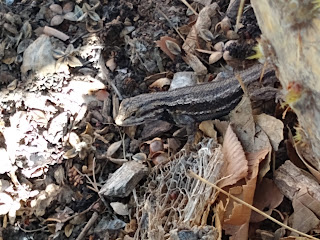
This is the first southwestern fence lizard for the year. I have also seen turtles in the ditch but have not yet been fast enough to catch a picture. Lizards need heat to digest insects they catch, so are usually sunning themselves in the spring. When the night time temperatures rise above 60F they are going to be very abundant in the leaves.

I am quite surprised by the number of American Kestels that are around in the early mornings. I'm trying to notice what they eat because they have a very wide diet, everything from birds, to insects and small mammals.

Great blue herons are very easy to spot, but only when they want to be. While fishing they are quite cryptic and secretive.

They often perch high in trees during the breeding season and show off their fine feathers to each other during the day. Not very vocal, they often attract vocalizations from crow flocks, but not usually the aggressive mobbing behavior that crows reserve for raptors like coopers hawks.
Most gardeners are busy planting the cool weather plants right now and many are noticing the "weeds" like this london rocket. These small yellow flowers are important food resources for many early pollinators like the cabbage white and morning cloak butterflies that are both present right now.
 The Canada geese are not found in the huge meadow flocks iket hey have been, but they are still around and some are nesting. The males become very aggressive and "hissy" at this time of year as they protect the females.
 
There are a large number of wood ducks in Corrales as nesting season begins. This duck is not levitating, but is standing on a submerged log. Ducks do not actually like deep water and while they are found on land, water, and air, they never seem to be fully at home in any of those environments.
This female wood duck is getting a lot of harassment from a loud whistling suitor. I would never have spotted her without the loud hooting of the nearby male. These small ducks have claws for gripping bark and nest in tree cavities. They can also raise two broods in a season, which is unusual for American ducks.
The male is loud, showy and fussy. They are usually found near a female at this time of year and are much more shy than the mallards. You can't deny that they are very beautiful, however. They are always found where shallow water and trees come together so the bosque is ideal for them.

Tuesday, March 8, 2022

Post

 One of the ways the species avoid too much competition is to operate in different niches. What one animal does not need, other animal will take advantage of.

For example, yerba mansa and grass are much more shade tolerant and short lived than the muddy rhizomes of the sun loving cattails. So, in the scuzzy ditch, the shade from the cottonwood trees kept out the cattails seedlings a few years ago. Those cattails built up sediment over the last four years and have stopped the carp moving upstream and reaching other young plants. The cattails will be dormant this year as the water table is too low for growth. The shady, protected pools left this year are growing yerba mansa and grasses and are likely to be more attractive for insects and bullfrogs. This is a protypical "wet meadow". A whole different ecosystem is developing based on water levels from the last few years...and 40 years of cottonwood growth.

These new environments suit different birds in different ways. More and more phoebes are moving in as this winter's birds are beginning to move out. These birds are pure insect eaters, so the winter seeds are of no interest to them. Which is good, as the stores of Russian and New Mexico olives are just about gone. There are still a few mistletoe and domestic pyracantha, however. 

That tiny, thin beak is perfect for tiny gnats. For an AMAZING read about how various birds use their tongue to eat, follow this link. Being a specialist feeder of gnats means there is always food, but the amount of effort needed to get it means most phoebes are solitary for most of the time.

Another common bird now is the bluebird. While they also eat insects, they are much more generalist than the phoebes. As a consequence of their broader diet, there is less competition for food, so they can be much more communal than phoebes. They are often found in large flocks around bird baths and small groups around bird feeders.

The mallards have been in Corrales since the end of the summer, and are now quite used to human presence. The flocks are never very large because the mallards are actually very intolerant of each other....unless there is bread being offered, of course. Although they can tolerate the presence of each other for food rewards, they much prefer the solitude of the ditches in breeding pairs.

These sea gulls, on the other hand, are very much communal birds and in New Mexico act a lot like the American crows. They avoid competition with those crows by roosting in water instead of the trees, and are not often found on the landfill feeding sites in the middle of the day, when the crows prefer to be feeding. This flock can be found near the Alameda bridge most days this month.
The red tailed hawks that are around right now are the biggest I have seen in a while. This is likely because those are females look for nesting and hunting sites. This one was watching the ducks with great interest. The ducks, were also watching. They did not fly very high or far from the safety of low hanging branches and the safety of the water.
The diversity of spiders in most evident when small numbers of many species first begin to come out in spring. At other times of the year different spider types tend to dominate certain environments, so there is less diversity. This is a trachelas species trying to figure out if it likes the indoors or not.
There are still a few sandhill crane around, but the migration back north has definitely started. A few crane will stay in New Mexico year round in isolated pockets. But for breeding, most are lured to better locations.
While wood ducks are clearly beautiful birds, I tend to be annoyed by their flighty attitudes and constant bustling over seemingly nothing. They are not stately birds like the mallards are. They also do not hold still very long to be admired like the cranes will. That impressive red eye is a common bird motif to advertise a healthy, breeding male.
I see a lot of doves along the roads in the morning at the moment. I am not really sure what they are looking for , but I suspect it is salt or seeds dropped from muddy car fenders. Like most birds, their motivations are sometimes enigmatic to amateurs like me.
All the porcupines seem act in concert and they have recently all left their usual trees and moved somewhere else, following some sort of secret signal that only porcupines can sense. This one has tucked its dark face into the hollow made by it's furry forearms to keep out the cold winds. You can just make out the tiny, teddy bear ears by their dark bands above the face. Staying ball-shaped keeps these mammals as warm as possible. While all porcupines seen to act together, they usually keep their distance from each other.
 This woodpecker is very interested in the branches of this apple tree. Hopefully the farmer appreciates the efforts it is going to, keeping down the boring insects. There are many woodpeckers, all spread out and communicating with their neighbors by loud tapping.
 Humans have long visited these river banks for many different reasons. This is a stream gauge used to measure water flow. For some reason there are also 6-7 parking stops thrown into the ditch as well, in a random act of vandalism that a volunteer is going to have to climb down into, remove, and then place back in the parking area. Some areas of graffiti have been covered, but there is always going to be more. Vandals have endless energy.
This patch of gravel is actually one of the growing number of glass chip piles left over after a smash and grab in public parking lot. The Cabazon trailhead is much smaller than the Alameda site, but has seen much more theft from vehicles from the recent high levels of bosque visits. While the area is considered safe, people should remember that valuable personal items in cars are still tempting to thieves. People usually avoid conflict by keeping away from each other and visiting the outdoors, but this can't be avoided when a parking lot is designed to bring groups together. Groups who, apparently, have different ideas about personal and public property.

Saturday, March 5, 2022

value


 Objects have more value when they are rarer, according to the economists. But bringing back value to something that has become rare is very difficult, and never appreciated at the time. The emergence of insects in the spring is a common event, but for a while, these insects obtain special rarity status as the sun's heat re-asserts itself on the world.

This false spring in New Mexico is slowly bringing out more insects. The variety of insects is truly mind blowing, and a beautiful picture can bring this out their beauty more. But even the most plain creature can be priceless. Unfortunately that usually only happens once it is gone forever. Or maybe not; everyone knows about the dodo, but has anyone heard of the solitaire? Looking closely at this plain moth shows beautiful patterning, and also gold filigree on the trailing edges.
 Likewise, everyone has heard of parasites, and predators, but often the relationship is far deeper than that. This is a gall midge, it manipulates plant hormones to create eggs for the larva to grow inside. But really, the lines will blur from the nice neat high school examples of biology. Even at the college level, closer examination often makes things more complicated, for example, a fungus is implicated in the ability of the insect to produce galls, and must work with the midge is as yet unknown ways to acheive a common goal.
As a side note, see those tiny clubs that are sticking out from the side and look like missing legs? Those are halteres and are advanced flight stabilizers found on helicopters.
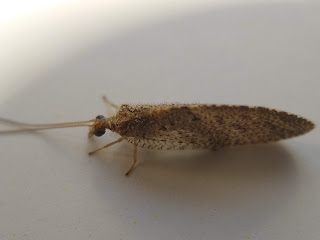
 With plant eating insects around it is inevitable that there would be insect eating insects following them. While the familiar lacewing is green, there are many other insects out there that are not farmed for controlling aphids on people's roses. This brown lacewing species might even be more closely related to a mantidfly, which looks exactly like it sounds that it would.
If you don't know what you are looking at, this spider can seem terrifying. It has long fangs, is bright red and a bulbous, shiny looking body. If fact, the harmless woodlouse spider uses those long slim fangs to reach around and pierce the woodlouse in their vulnerable underbelly. These spiders have a very mellow personality and are highly predictable and slow, just like their prey.

 
 This is an amazing insect. That long curved hook, or rostrum shows this fierce predator is also an insect eater. This genus is often called the assassin bugs, and has a much meaner reputation that the "delicate" lacewings. Underserved, I think. While some species are scary, the genus is remarkably unexciting.
 This insect also has a sharp, stabbing beak. But because it is a leafhopper, we are not afraid of them. Most leafhoppers look alike, but again, they are usually green, so this one sticks out a little. All the insects I have found so far this spring have very muted colors, but I am not an insect specialist. It could just be the indoor lights I am photographing with.
The mayflies have begun to hatch. This stage is not the full adult, and is known as a "dun" for those who fish for trout. The appearance of these insects, with their large, red eyes, is a sign that the fishing is going to be easy for a couple of days. The excited fish become a lot less discriminating in their hunting.
  
This phoebe is definitely an insect specialist. They sit on a branch over water and literally fly out to catch insects one, by one. They never seem to sit still. Their numbers are going to gradually increase along with the insects they chase. Think about this bird next time you or someone else is reaching for the insect spray for your garden. They feed on the insects those product are trying to poison. Worse, the permanent residue washes into the waterways and affects the aquatic world the fish live in.
Almost all bird behaviors serve more than one purpose, as does almost everything else in biology. Everything is interconnected in life. Many people comment on woodpeckers hammering on the ends of telephone poles. People wonder at why a bird brain would be looking for bugs in treated wood. The answer, of course, is that there actually are some insects in treated wood, but mostly they are using the long pole to resonate a "flexing" call (mating or territorial depending in who's listening) to all other woodpeckers in the nearby area. By audio advertising, the birds can spread out territory without too much physical fighting.
 The purpose for all this bird activity is the nesting season. Ducks are the best nesting experts in many ways. These feathers are likely from a nearby duck that is using the small breast feathers to line the nest. The duck herself is safely hidden in the nearby cattails and densest Russian olive and invisible unless she moves.

 This prominent nest on the ditch has been used by several bird species over the years. These is a nesting bird there right now, but I can wait it to make an appearance later in the year. Nests should always be strictly left alone during their vulnerable incubation time. Many birds get stressed even if people stop near them for too long. Nest protection also applies to strict leash control on dogs that like to swim in the ditches and often chase off nesting ducks. There is not enough wetlands for the ducks to hide when compared to the numbers of dogs that are literally bred with the behaviors to flush them out of hiding.

 This crow was raising a huge ruckus in the bosque and it took a while to figure out what the issue was. Crows are very intelligent and this one was calling up other members of the "crow militia" to come and mob a nearby predator. When no-one else answered it's alarm call, it gave up and flew on, after a few dive bombs.
 
 It took a while to figure out the target of the crow's ire. I found the target quickly enough, but it was not the Cooper's hawk I thought it was. Turns out, it was actually a sharp-shinned hawk. It was forced to perch and wait out the crow's aerial assault before it could continue to hunt in the tree tops. These birds are sparrow specialists, but all raptors seem to annoy the nesting crows right now.
The bosque is full of the sounds of dove wooing calls right now. With perseverance,  the call can be copied close enough by people to start the preening and courtship strutting the doves engage in once a pair find each other. It's not that the birds are dumb, just that they are under a big time crunch to get mating going.

 Skunks, raccoons and porcupines also have begun traveling the dusty roadways looking for food, territory and mates. This track shows the heel of the subject's foot, called "plantigrade" meaning this animal walks on its heels, this track is probably a skunk. They can travel great distances poking their noses into the leaf litter as they go.

Other mammals in the bosque don't travel nearly as far. Most squirrels seem to stay near to the territories they have already established in the fall. Beavers, of course, build lodges and dams along the river. In areas with flooding, like the Rio Grande, they often will just burrow into the high river banks instead. In Corrales, they can be an occasional nuisance by blocking the clear ditch water flow. This actually helps ditch maintenance in many ways by altering the water levels and controlling sediment loads and vegetation. Guess it depends on what the goal of the ditch actually is, and whether different goals can be overlapping.

This plant is called a donkey tail and is a hardy ornamental plant in the spurge family. This one is in the bosque near River's edge III after it became an feral species. The sap is toxic to bare skin and the plant is insanely hardy and difficult to remove. It is classified as a noxious weed in some places. By the time we find out if this plant is a threat to other species, it will be too difficult to eradicate

At the other end of the plant spectrum is this dock, a Rumex species. This helpful species grow where the ground is very damp and are part of the normal succession of ditches as they revert back into the grassy meadows that used to exist here. That is a gross simplification of the process, obviously.

This is a link to a PDF document with a more detailed description of wetlands in New Mexico to get a syllabus of what is basically a blueprint for rewilding of the bosque.

Plants are hard to identify early the growing season, these green shoots are identified by an app as a Psilostrophe species. They are common in the Sandia foothills. These were growing on gravelly soil underneath a dry culvert. Some sort of grass seed seems to have also become entangled in the clumps, brought in by the winds. Eventually these plants with form a community of interdependent plants in a tiny, specialized community.
Communities of organisms is literally what biology is. The details get very nuanced, sometimes unnecessarily so. The studies of relationships, and of competition are also shaped by biology. This bracket fungus grows in the dead wood of a tree. Removing the fungus does not help the tree much, but that is arguable. No matter what, all the wood of this tree will eventually be turned into soil by the action of fungus on dead wood.
This mistletoe is very similar to the fungus, but thought of very differently. A parasitic plant that grows on a living tree is seen as a disease and needs to be eradicated. It is been this way since before Louis Pasteur allowed germ theory to defeat the competition. Parasites like this plant fundamentally allow ecosystems to cycle nutrients, enriching everything that relies on those nutrients (see previous blog...erhh, blogs).

Science communication is vital for people to understand why they should care about mistletoe and bugs. The tools used are varied. Beautiful photography is an important part of this story and can express a great concept in a way thousands of words cannot. This (bad artistry) picture shows an artificially irrigated field being used by wildlife. The problem is a good photograph also will have selection bias, and suggests that the subject of the picture is commonplace. In this picture this is definitely not the case. Land use is subject to the whims of a society that may, or may not place value on all wildlife equally. The sad fact is that without the photogenic sandhill cranes, the common ducks would not have access to this rich habitat. Also, there is far too few locations where wetlands, and all the species richness that go with them can be found in Corrales, or along the Rio Grande river flood plain. Rareness is valued, but conversely, wetlands have become rare because they are not valued. Economics cannot be separated from biology, either.