Translate

Tuesday, December 7, 2021

Ambedo

 Ambedo is the term for being absorbed in a vivid sensory experience. This is usually desirable and pretty easy to find these days in the quiet of an early morning walk in the bosque. While the sounds of car engines is always present, there is stillness if we look for it. In that stillness, details become more vivid.

Cottonwoods dominate the skyline in the bosque. These trees are adaptable to the conditions they find themselves in. The biggest trunks are often found in those fields near the canals/ditches that are grassland. This is because  they have the best room to grow
The bosque preserve is more varied. The biggest trees are all smaller in general, because the competition of close neighbors limits sunlight. However, the trees are younger, and have a wider variety of ages. Age diversity helps reduce extinction risk due to a catastrophic decline (works in human populations, too)
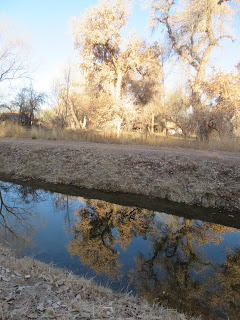
In this mild winter, the canals are refilling quickly even as the drought continues. The new water has little plant growth in it and no animal activity. No ripples, no murkiness. The surface is smooth and reflects the golden trees above them perfectly. The water is dark due to dissolved tannic acids from decaying plant matter. There is no ice or sediment loads to scatter the sunlight.
The beavers prefer heavily overgrown, shallow sections of the ditch to modify. In this picture you can see the still water on the right as the water backs up. The dam captures silt and leaves upstream and releases a small ripple of water. The water reeds are inhibited from growing in the deeper part. The muskrats who share the dam with the beavers prevent establishment of new shoots by eating the young plants.
Beavers are motivated to dam streams by the sound of running water. They seem to prefer very quiet sections of water, and usually chew down the biggest tree trunks to control the growth of trees in the immediate area. They seem to dislike overhanging Russian olive trees, probably because of the leaves. They actually prefer to eat the bark of tree's upper branches with a diameter of a walking stick for food. Often these are stored underwater for later
In more overgrown areas, the overhanging trees shade the water and the duckweed and snotweed grow prolifically. Ducks shelter from predators under the low hanging branches. Weirdly, the abundance of plants and light at the surface means death to the other plants rooted in the mud. The deep shadow below the leaves at the water surface prevent photosynthesis. Worse, the plants will die eventually and bacteria uses up oxygen to digest the remains, causing eutrophication
In the water you can see swirls that mark the passage of feeding ducks as they hunt for aquatic insects hiding in the olive green threads. This area is dominated by snotweed (a type of freshwater filamentous algae). The passage opened by the ducks paddling feet are filled in by the free floating duckweed (a true plant), giving it a different color. The most recent duck paths have less duckweed and so the path seems darker from the shaded water showing through.
Shallow, clear water has abundant sunlight and the water slows down the changes in temperature. Lawn grasses have evolved for this type of climate. There will always be some sort of mosquito fish in these locations, so the water is always rippling.
Areas with trees are very dry right now. The leaves will help retain moisture a little, but they disappear where there is a lot of human activity. This cache of food was dumped in the forest for unknown reasons; ostly likely by campers who had to leave in a hurry.
Most of the area near the Cabezon trailhead is pretty unsightly until you get into the bosque itself. The whole area used to be a landfill. Here, a group of children have collected some interesting old bottles and rusty tins that poked through the leaves.
This is a male Milde's tarantula hawk wasp.It has tattered wings and will soon die. These insects hatch out of the zombie corpse of a tarantula spider. They are not especially prone to stinging. I followed the sound of the buzzing/fluttering for quite a while before I could find it on the ground. Normally they are frantically flying around looking for nectar and females. The bosque was unusually quiet that day and all the sounds were amazingly clear, from the tiny bird flocks, to the wing beats of the low flying cranes. This was the only insect I saw, but pretty remarkable for this time of year.

Thursday, December 2, 2021

renewal

 The growing season has already started in the bosque, for some plants. Different plants grow in different ways. Those that grow every year from seeds have different skills than those that can grow from root stock. All plants, however, are taking their cues from the "photoperiod". This is a complex process, but basically plants use hormones to control behavior, based on light.

Some trees, like these cottonwood buds have a wide range of times when they come out. Other trees like the elms are different and bud all at the same time.
 This tree mistletoe is more visible during the winter, when it can often be the only green on a tree. Cottonwoods are very tolerant of many parasitic organisms like fungus, insects, mistletoe. This is bad news as all mature trees seem to have some sort of "attack" going on. The good news is that these trees are not going to be killed. Some trees like the American chestnut have been almost wiped out by a single species of parasite.

One of the traditional first plants of spring is the London rocket. They like moist areas with good shade. They are often found with dandelions in areas of cultivated lawns.It has an agreeable pungent flavor, and totally edible. Considered a weed, they spring up, seed, and disappear almost in the blink of an eye.
 In contrast, this giant reed is a grass species that sprouts from underground runners. This gives it a head start when it starts to grow again after damage. This spot in the picture shows where it is returning after having been dug out from a fence line last year where a tree limb fell on the fence (the limb that fell is stacked neatly in pieces on the left of the picture)

This is willow baccharis. Not a very easy name to remember. It is in the aster family, like just about everything else. These flowers aren't supposed to come out until April according to literature. Most plants, of course, cannot read, so do not follow the textbook. This plant can take advantage of disturbed soil and sprouts before anything else. The last big disturbed event was from the army corps of engineers. A similar disturb event is occurring now at the Harvey Jones outflow north of Romero and the levee road, so expect to see unusual plants there in about, oh, ten years?

Several elms in the Andrews Lane entrance to the bosque have been "girded". This is the normal approach to prevent a tree from spreading. Weirdly, this approach is done to the large, mature trees instead of the younger and scrubbier ones that spread. I also notice that even thought the tree is dead, the wood is unaffected by rot and the trees become snags and don't fall over. As to why this particular tree is a shrine, I will never know.
This battered tree root across the trail has adapted to become a structural support rather than an organ for absorbing water and nutrients by a process called suberization. This is an interesting process well studied in chemistry because it controls the quality of market foods such as potatoes and sweet potatoes.

 Cold dry periods often cause snapping of tree trunks. You can see the hole at the base of the tree from a partially healed past injury. Fungi traveled up the dark, moist heartwood and hollowed out the core until the dead weight overwhelmed the fibres in the bark.
This is the close up of the stump. The dark core shows spiderwebs and dry rot. Then there is a thin section of actual wood, wrapped by a curling, papery cuticle. The thick, tough bark covers the outside and is almost as thick as the woody section. Cottonwood is considered a soft hardwood in arborist terms. Its lack of desirability to loggers probably saved it from commercial over exploitation. But its future might depend on commercial tree farms. The creation of a demand for fancy "live edge" wood tables is concerning, as they need old trees without defects that have taken many, many years to grow. Poaching of thousand year old alligator juniper on public lands is pretty endemic right now and is blatant. Cottonwood trunks have lots of character and will soon be sought after as other sources of easy wood disappears.
 Cottonwoods face many attacks. Here the random scribbles of a bark beetle larvae burrowing under the bark can be seen. There is also a dark hole where some carpenter bees chewed into the fallen wood to create an egg chamber. The smaller dimples all over are from a woodpecker hitting the wood and listening for the echoes of beetle tunnels below.
The willow swales at the edge of the Rio Grande is a very unique environment. There is a lot going on there, especially as it a dense area mostly avoided by people. Where humans have made paths, the invasive plants have a chance to grow. Here is a Russian olive. Where the morning sun is able to reach the ground the olive is growing new leaves to take full advantage of its fast, bushy growth. These trees often reach out over running water to get to open sunlight. The beavers like to prune those branches back for their dams, for food and to create the open back-up ponds that suit their favored lifestyle.
Coyote willow forests also have a damp soil that favors the growth of grasses that have also begun to grow and green out in the mild winter. This ideal nursery environment is often where the future cottonwood seedling have a good chance to grow to full size, according to the rules of forestry succession.

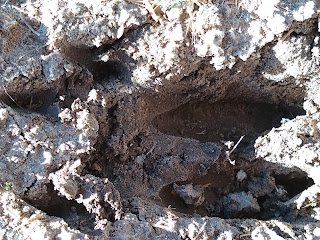
Many animals use the human trails to move about quietly. Here is a nice picture of a squirrel track. The heel is deeply imprinted and is found in all mammals that climb for at least part of their ancestry. The term is plantigrade. Coyotes travel these paths too, leaving scat as calling cards to avoid boundary disputes and communicate.

There are a lot of insects still around, but they tend to be much smaller. This leaf-hopper is actually a specialist sap sucking insect of the tamarisk tree. It was accidentally introduced AFTER the tamarisk was identified as critical habitat for the southwestern willow flycatcher. Most people know about the biological control beetle, not many people have followed the parallel story of this leaf-hopper. Biology is usually more complicated than the one sided arguments of industry versus environmentalists, and that's saying something.

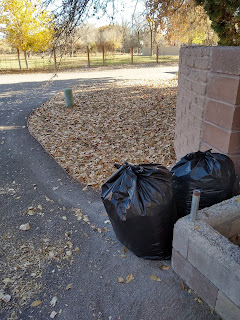
I continue to be in awe of fallen leaves. Plants have changed every corner of the planet by their actions. Dropping leaves creates, then amends the soil moisture, acidity, nutrient content, oxygen, aeration and just about everything else. Creatures thrive in it, use it to hide, and keep warm. Yet every year humans spend days of their lives to blow them away into plastic bags, to deliver into other people's land fills. Madness.

"The aim of art is to represent not the outward appearance of things, but their inward significance" - Aristotle
 
A beautiful local keystone arch from a red sandstone from nowhere near here... Arches are a human invention for creating space under a roof. But arches are also spectacular natural shapes as well. This non-functional arch juxtapositions those two concepts so well.

This comparison "arches" photograph shows the beautiful arched limestone capped granite of the Sandia mountains during the "pink minute" of a typical sunset. Not co-incidentally, the gravel under the human arches is also granite or "crumpled mountain" that does not look as nearly as pretty...

We are used to normal things turning political in the blink of an eye. This stack of rocks found in the bosque for example: a skill called rock balancing popularized by Pontus Jansson and popular on Instagram. It became a hot topic for a while when many people began to disturb river edges while looking for smooth edged stones to stack.

Biology is confusing. Humans do nothing to make that picture easier to see. These seed pods came from a "golden rain" tree cultivated THROUGH the floorboards of the Corrales Bistro outdoors patio. Of course, the work of gardeners (who love this tree) is running into problems with environmental managers (who are, at best, concerned). The city of Albuquerque has this tree on a list of trees appropriate for planting. At the same time, Florida and Texas have this exact same tree on a list of invasive species. Personally, I think if we could just take all the energy we spend gardening and criticizing each other, and put it towards the shared space we all live in....
This is a common four winged salt-bush. One of my favorite plants. Usually the seeds are visible in the thin vanes of the seeds. But this one was covered in fuzzy balls as well.
Observing closer, these balls were the nesting chamber of a gall midge. These insects manipulate the plant hormones normally used to control growth so that they instead make these fuzzy cocoons. The plants grow is dry saline conditions on the loose soils above (west of) Loma Largo road

 Most people likely have not noticed, but the Rio Grande in Corrales rose about a foot on Dec. 2. The level of the river is entirely human controlled (from Cochiti Dam, I think) and this flow likely co-coincided with silvery minnow releases. Many sand banks are under water for the first time in a while and the river is turbid as the new sediment is washed downstream. When it recedes in the summer, new seedlings will grab the land back again for another season.

 It takes time for water levels to seep into new channels, but the water table should slowly rise. This picture shows the bottom of the interior drain at Priestley road in Corrales. The water table is almost at the surface, and rising. The ditch soil is turning dark as the salts left behind dissolve again in the rising water.
The Sandias outline against the sky can be used as a calendar of the passage of the sunrise over the course of a year. Sunrise is now directly east of us, instead of more northeast. Because humans like cardinal points, this means the sunrise shines down all the east-west roads at sunrise. Because roads are tree-free the roadside weeds are given a powerful cue to grow. Tracks in the dirt also show up better in the highly angled light. After loitering at the southern end of the Sandias for a month or so, the sunrises will shoot back northwards again as spring arrives in a few months. Not long ago, sunrise and the angle of the midday sun would have been navigation aids, and still can be for those who can observe a simple shadow on the ground while looking at a watch. Arcane knowledge that now belongs to a different era. The arch of the passage of the sun through the sky is still a work of art, whether it is significant or not.

Tuesday, November 23, 2021

delicate

 Watching things grow and die in the bosque over the years is quite enlightening. But the focus required often means a person could forget that there is a bigger picture here. We are all immersed in a web of life that flows and pulses like the river that directs everything. Whether our own roots are deep, or shallow, we are all connected by nature to each other.

When one tugs at a single thing in nature, he finds it attached to the rest of the world. “
John Muir
 
 We do not feel the pull of the moon in Corrales quite like they do on the coasts, but we are affected none the less. This picture is the night of the most recent eclipse of the "beaver hunter moon". (I did not stay up for the event). The beavers here do not, of course actually hibernate much at these high temperatures (and low latitudes). Also, they are not hunted much anymore. But they certainly have long memories and are almost never seen by humans during the day.

The small flocks of cranes are still enjoying the large fields. They seem to prefer a wide variety of habitats. They move from bare earth patches, to short grass pastures, to open woodland. They really like being able to see around them. Not surprising in a environment full of cougar, dog-walkers, coyotes, and bob-cats. This time of year they are courting and being very raucous in the middle of the day. The few we have here don't even hint at the multitudes that are down at Bosque del Apache, where the daily fly-out takes an hour to finish.
 The Canada geese forage on grasses during the day, but they cluster for safety on the Rio Grande river at night. The open spaces, cold mud, and fast water means no predator is going to catch them unawares. The many pairs of eyes means that nothing on the water will be sneaking up without being noticed during the night.
 Ducks are hunted by humans all over the US, but it seems like the pressure is far less in this state. Of course, hunting is not permitted in the Bosque Preserve or Corrales. Ducks clearly prefer the protection of ditches instead of the river and show a preference for tight places a large hawk would have trouble navigating in. They like water that is less that six inches deep and still.
 All animals have a "preferred" food and a "starvation" food. In the winters crows come together in huge flocks in the bosque. They forage in the local trash dumps for food, but mostly in the winter. This is likely their "starvation" choice because they meet and mate in preparation for the spring and don't have the time to cover vast open areas looking for road-kill; the "preferred" option. They also forage over large areas of open fields next to trees at this time of year. Are they looking for grasshoppers?
  
The red tailed hawks will hunt a broad variety of prey, but I do not seem them do much of that in the bosque. I suspect they mostly just watch stuff, like I do. They like to perch near the flyways in the trees where the white winged doves funnel through in the mornings, but they only watch. They are one of the few raptors that hunt mammals co-cooperatively. They likely use the bosque to roost, and hunt in the more open areas of the bajada (west side of Loma Larga in the sandy hills)
This is a very exciting photograph of a definite javelina (don't pronounce the "j", and not a pig) track. They are in the area for sure and have been seen by quite a few people now. This one is in the base of the clear ditch that will shortly be under water. They are traveling from the Sandia reservation or the Bosque beach to the lush fields of Las Brisas in Corrales at night. They seem to be levering up the flimsy wire fences at the boundary. They are new arrivals to the area from the south and will likely make a big impression when some tangle with people, pets and vehicles. Things will be bad if they find vegetable gardens and apple orchards. Personal advice; they aren't dangerous but give them their space.

Cottonwood plants do not grow as easily as you would think. They seem to need the protection of a nursery ground cover like tall grasses and must be able to tap into the shallow water table. They are very susceptible to fungal attack when older and need lots of space to spread out. Unfortunately, they are not a useful timber species, so there is almost no research into how to grow them. This also means no-one is their champion or protecting their long-term survival in a changing world.

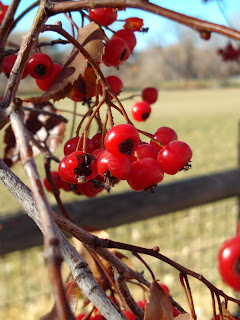
Pyrocantha, or the more colorful gardener's name (marketing name) "firethorn". Not poisonous, but a bird starvation food. Grown because it has thorns and is a great hedge plant. The term "invasive species" has kind of lost it's meaning when just about EVERY plant is imported from somewhere else. Also, we are completely unable to do much about the spread, other than document the loss of native species they replace.
Up on the bajada side there are a few native acacia species (likely Robinia neomexicana) beginning to appear in depressions that hold moisture better than the desert scrubland. This general tree family is an invasive in Hawaii (Molucca albizia), but "behave" better where water is scarce. They stay small, compact and dense. Their deep roots often improve and anchor the soil enough that other plants and animals are able to thrive .
 Milkweed thistles also do better where the grass is able to grow to at least ankle or knee height. Come summer they will host a few caterpillar species. They are usually considered a noxious weed because they are poisonous to livestock, but these were found in Rio Rancho city center. No cows here, just parking lots in need of .... pollinators.

In this picture I tried to show how deep the roots of a seedling cottonwood grow. The middle red line is the base of the stem at the soil surface. The roots could be even longer than these as they many not have come out whole. Just below the soil surface, you can see the bushy lateral (surface) roots. In New Mexico, many seedling are using this time to get established and there is often a splash of green under many of the cottonwood leaves along the trails. Something is preventing the cottonwood seedling from establishing. As with most things the answer will end up being more complex than we are willing to deal with right now.

Thursday, November 18, 2021

Return

 The ditch is slowly but surely refilling as the taps somewhere above the Corrales siphon are turned back on. Most people are probably surprised to know that the water passing under the bridge at Andrews Lane started flowing UNDER the Rio Grande at the Siphon and began....somewhere in Bernalillo (I think). Hiking to the source is thwarted at the Pueblo boundary. The river level is also rising. and even a few inches rise allows the ditch water to flow many miles in a flat country.

The ditch flora and fauna is going to change pretty profoundly as the water returns. The unexpected changes are the most interesting. When a dry zone become wet (ephemeral) the changes are profound.

These songdogs were following the advancing water front along the ditch. I suspect they were looking for rodents flushed out by the water from the newly dug burrows. They stayed out a little too late and got caught out by the early morning dog walkers (me). They MIGHT have been eyeing my dogs as snacks, but my observation was this one stood guard until the smaller ones had escaped, then they all left together for the safety of the bushes. This group of three has stayed in the area, traveling along the bosque paths early in the morning. I have run into them pretty frequently. We nod amicably and both continue on our separate paths.

We have not yet had a hard freeze and many insects are still around in the forest. This (I think) is a tachnid fly, common in the mountains but odd to find down by the river. Scary looking but totally harmless. Especially as the cold mornings mean this fly is basically immobilized until it can reach working temperature. In an emergency (like a person picking it up) it can buzz the wings and generate a little heat, but that will use up precious energy reserves that will be hard to replenish during the winter
This is a very common spider, the Western Parson spider. A ground spider; it hunts at night. They can be found in a house, but not usually. Most people don't realize those long legged skinny "daddy long legs" (Cellar spiders) in the corners of rooms are spider hunters and prey very effectively on the more mobile ground spiders like this one. This picture shows off the "necktie" pattern on the abdomen. These spiders prefer wooded area and are often found in the leaves of fall.
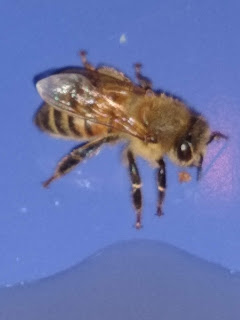
Honey bees should be hibernating by now, but this one at the local pizza joint was still out. Often bees will eject members of the hive to reduce the depletion of winter food stores. Usually the non-productive drones are thrown out to starve, but this looks to be a young female. There are no pollen in the hair sacs on the legs. After I gave her some sugar water, she went back into the cracks of the building, hopefully as part of an escaped swarm setting up in a new location. Bees have been domesticated for about 9,000 years. The western honey bee is not native and appears to have originated in Africa and is now mostly bred in southern states in a highly commercialized market.

I succumbed to neighborhood peer pressure and raked up the leaves in the yard. I have the misfortune of understanding that this is a bad thing. Those leaves on the ground do so much for the local wildlife. When combined with piles of wood, they are a habitat for all sorts of life. They are nurseries for plants, fungus, insects, mammals. They ameliorate the soil, regulate the micro climate of the ground, hold in moisture and add acidity and nutrients. They shelter larval and burrowing creatures. They feed crickets and the spiders that prey on those creatures. They hide burrow entrances and provide bedding to the animals in those burrows. The fungus that lives on this leaf substrate feed moths that the vibrant towhee and robins spend the winters hunting for. The dead leaves prevent young cottonwood tree saplings from freezing when the frosts come.
This plant is mock vervain and is bright burst of color in the otherwise dull woods. Insects are not really feeding much right now, but there are many species that could survive on the nectar this flower offers.

Oddly, my app had some trouble identifying this plant that stood out in the Romero Trailhead burn scar area. All the plants, shrubs and trees in the area are exfoliated, but there were a couple of bright green patches of this plant that stood out. I'm pretty sure it isn't NM olive.

I still have a lot to learn about the intricacies of water tables and hydrodynamics. In Corrales the water table is usually stable over all (fluctuates locally) but is anoxic. This has implications for plants growing in the area. There is a project about to begin replanting a burn scar near the Romero trailhead. The depth to the water table will probably be crucial to this project. Just north of that, the bulldozers are stripping off the surface soil specifically to help plants reach into this source of water.

The north end of Corrales is seeing many projects lately, a lot of change in the river and on the banks. All that activity is going to have many uncertain changes downstream. For example, the Rio Grande is at a late stage in the geographic river profile. With the introduction of the weir at Siphon beach (to protect the siphon with silt) the water action has changed from silt deposition to a scouring action below the site. Also, you can see a steep cliff forming on the pueblo side of the bank at the Siphon as the soil is eroded. This picture is further downstream, where a meandering curve in the river has faster water eroding into (east facing) bank. Notice the older tree has died as it's roots were undercut and many new seedlings are fighting for territory in the sunlight and water available at the base.
Next to that soil bank erosion, the wooded area had been planted with a willow species (probably Gooding's). This species of tree has shallow roots and needs access to water. For whatever reason, the water table is too deep for these plants to become established. None of the planted trees (identified by this anti-beaver chicken-wire screen) appear to have survived. The invasive tamarisk trees are so insidious because they draw down the water table locally, killing seedlings whose species are adapted to easy access to groundwater, like cottonwoods and willows.

Notice the dangling legs of this porcupine the legs should be tucked up into the body. It is actually dead and has been for a while. The face on this individual (zooming in) had been attacked by some sort of pathogenic fungus. Other photographers have seen this same individual, but not looked into it much. Alarmingly, there appears to be reports on the east coast of a deadly fungal outbreak spread to porcupines from domestic pets. But mortality events related to starvation seem to happen to porcupines often during the winter as these slow animals face increased stressors at a time when the food available (bark) is of a low quality. Fungal infections have affected many animals , such as snakes, and frogs. Often the cause is linked to people's activities such as the pet trade (frogs imported from South east Asia brought chytrid fungus to Central American populations). Dogs and cats often transmit diseases like ringworm to wild animals. These diseases often are not noticed in the pets who are warm and well fed, but can be lethal to a native wild population facing hunger and cold conditions normally.