Translate

Tuesday, July 27, 2021

culture

 A place like Corrales is has such variety it can be bewildering. The different uses the land is put too would seem so mutually exclusive. Some people want big houses, others want small. Some like well kept yards, others like natural. Some want recreational land use for all, others make their living selling and parceling it up. Some farm the land, others want to pave it. Some like privacy, others like strong rules.

The birds in Corrales seem to have the same issues. Right now the hummingbirds are still dive bombing and driving out other birds from nesting sites. These hummingbirds don't even live here year round! Nesting season is just about finished now. The seasons continue to change. Soon we will be seeing ducks and crane and these little napoleons will have returned to warmer, wetter climates.

These apple looking things are actually walnuts. They are still young fruits. There are many nut trees scattered around but few people grow them in orchards. The pecan farms New Mexico is famous for are found further south, where they have a longer growing season.
Apples have a long and complicated history being farmed in the US. The small trees are so over loaded right now many of the branches snap under the weight of their own fruit.

Many farms are growing grapes along their fences, the number of vineyards appear to be going up as well. Corrales has been growing grapes since 1629 but fortunes have been pretty up and down over the years. I am not much of a wine person (but am still on the look-out for a bottle of Casa RondeƱa Sangiovese 2007) but this history of commercial wine making appears to have been severed by the great flooding of 1943.


Flooding doesn't seem to be the greatest of Corrales concerns this year, but the recent rains has made things difficult for the fragile ditches of the valley and the sandy soils below Intel. Corrales central drain is slowly filling in as more soil washes into the low areas. The ditch sides still collapse slowly as runels carve valleys into the steep sides.

This plant goes by many names like buffalo gourd. They are often found along the roadside of desert roads. They produce big orange flowers  along the ground. You can still see they remains of the flowr on the end of this fruit.

This trumpet vine has the start of the bean containing the seeds beginning to form out of the end of the flower. The process of flowers tunring into fruits is bizarre in the plant world.
Late summer is vine season and there are many plants other than buffalo gourd spreading out among the taller plants. The bindweed here is a little subtle. This flower is a bit unusual and has a 5 pointed star pattern, this is the equivalent of finding a four leaved clover.
This is the more usual configuration of six pointed star shapes in the petals of the flower. I think it will attract the same insects, though.
The colder weather has slwoed down some insects and I was finally able to get a closer picture of a bumblebee feeding on lavender in this picture. There are 49 species of bumblebee in the US and their role is very under appreciated. For example, they pollinate tomatoes and honeybees don't.

Not all symbiotes are quite so benign. This yellow string looking stuff is dodder, a parasite. It appears to prefer the goathead plants right now.
Honeybees appear to love the small yellow flowers of the goatheads, which will be leaving little caltrops all over come the fall. People have begun spreading and burning the green fronds now, but this is pretty much a fool's errand
I was kind of surprised to find a 10 lined june bug on this globe mallow plant. I had assumed they just buzzed around for ever, or something, I guess. I have a hard time believing they are also pollinators.
I know many amphibians have a closer connection to food webs in the bosque than is generally appreciated. But the actual details are pretty elusive. Still, this young bullfrog is leading the way for another generation that is slowly and surely taking over the Liam Knight pond in the Corrales center.
This was a bit of a puzzle. The scat is woodhouse toad poop. There is quite a bit of it along the edges of the middle ditch. This particular area seems to be host for some sort of tachnid fly that was either laying, or emerging from the mounds.
This is clearly domestic dog poop. The owner kicked some dirt over it and hurried away. That is unlikely to keep the flies away, and who knows if it will actually breakdown, or enter our waterways.
As a quick note, this picture is from google and is a reminder that 2 years ago today I began to blog about Corrales and the facinating ecology (including the humans). I am holding up a jar of a very large woodhouse toad. Happy anniversary to me! (I released the toad afterwards and I think it is the same one I found hanging out in this area yesterday)

Monday, July 26, 2021

Mud

This season has already changed the Corrales Bosque ecosystem is many ways. Everything changes, in subtle and not so subtle ways. Some changes are permanent, some come and go. Each year the weather is different. Each year the amount of space available for nature decreases.
 
The warm, humid nights have brought out the competitive singing nature of the local field crickets. Usually they will hide if observed too closely, but this guy stayed chirping, this act is technically called stridulations

The sound of crickets can be maddeningly hard to locate, because those insects have to be careful not to attract the attention of the local big toad.
There are not many of the large guys around. Actually, most of the toads listening right now are likely to be about the same size as the crickets! These are the young-of-year toads (YOY). How many survive has a big effect of numbers of crickets next year.
Even the tadpoles tend to be larger than the tiny toadlets. The tadpoles are really just designed to eat plant material, kind of like a amphibian version of a caterpillar.

Other insects are out hunting. The mantid species like this one are mostly in the tree canopy. They prefer smaller prey; like flies, that they catch during the daylight. By being stealthy they can catch many insects each day.
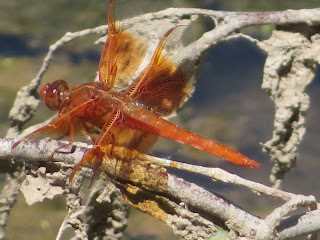
 

These colorful dragonfly prefer to leap out and snatch insects in between mid-flight wrestling competitions and dogfights.

There are viceroy butterflies in the bushes now, but not monarchs yet. The numbers and types of butterflies does seem to be increasing, however.
The vast majority of the dragonflies out right now are in the genus king skimmer. They are the biggest and flashiest of the dragonflies and seem to be very much into territoriality.
The butterflies are mating and also puddling. Their behaviors are a lot more complicated than just fluttering about in a dance.
Most insects are a lot more complex than they would at first appear. These bagworms are involved in all sorts of strange behaviors, the majority of which have never been studied. It is always hard to say if that research is worthwhile, but most of the time spend studying animal behavior does produce useful insights. Sometimes in strange fields not really related.
The stormy weather has produced a few showers, which has a definite effect on behavior of all the bosque's inhabitants.
As the old, wet wood dries out, it will often crack. Sometimes new plants grow from the fallen branches, or the wood becomes a new ecosystem. Often everything just becomes mulch to wash into the ditch.
This hose is attached to a pump and connected to a stagnant pond in a horse paddock. The water being drained is literally liquid horse manure. Being pumped into YOUR water supply. The ditches of Corrales are not a cesspool, but it is not for the lack of trying by some people...
surface water run-off does enter our ditches, of course. Usually it is in the form of a fine red clay if there has been heavy rains. This lays down a thin, sticky film that preserves footprints perfectly. This shows a story to those who care to listen. Here is a pattern formed by an active squirrel trying to leap across without getting too dirty.
A garter snake left this trail as it hunted for tadpoles left in the tiny puddles. Snakes are uniquely designed not to sink in mud.
The long fingers of raccoons also are ideal to find tadpoles buried in the soft mud. They often have more trouble walking around, but they definitely put in the miles as they patrol the ditches for signs of small things that wriggle.
I think this pattern is from a crayfish, but it could also be a lizard. I'm not too sure, but have plenty of time to find more tracks.
These inward pointing feet are from a toad. A pretty small one, that was half swimming at this point. I rarely find their eggs, but those toadlets are everywhere.
The turtles are pretty easy to spot as they hunt around in the last of the water in the ditch. They feed and nest in these patches of water. That are disappearing quickly this year.
While this red eared slider is invasive, no-one wants to see it squashed by a truck. This one was moved to the road in the direction it was facing.
The day has to be pretty sunny to entice these whiptails out of hiding. They are feeding very well right now.
The fence lizards also are enjoying the bright sunlight on the rough bark of the older cottonwood trees.
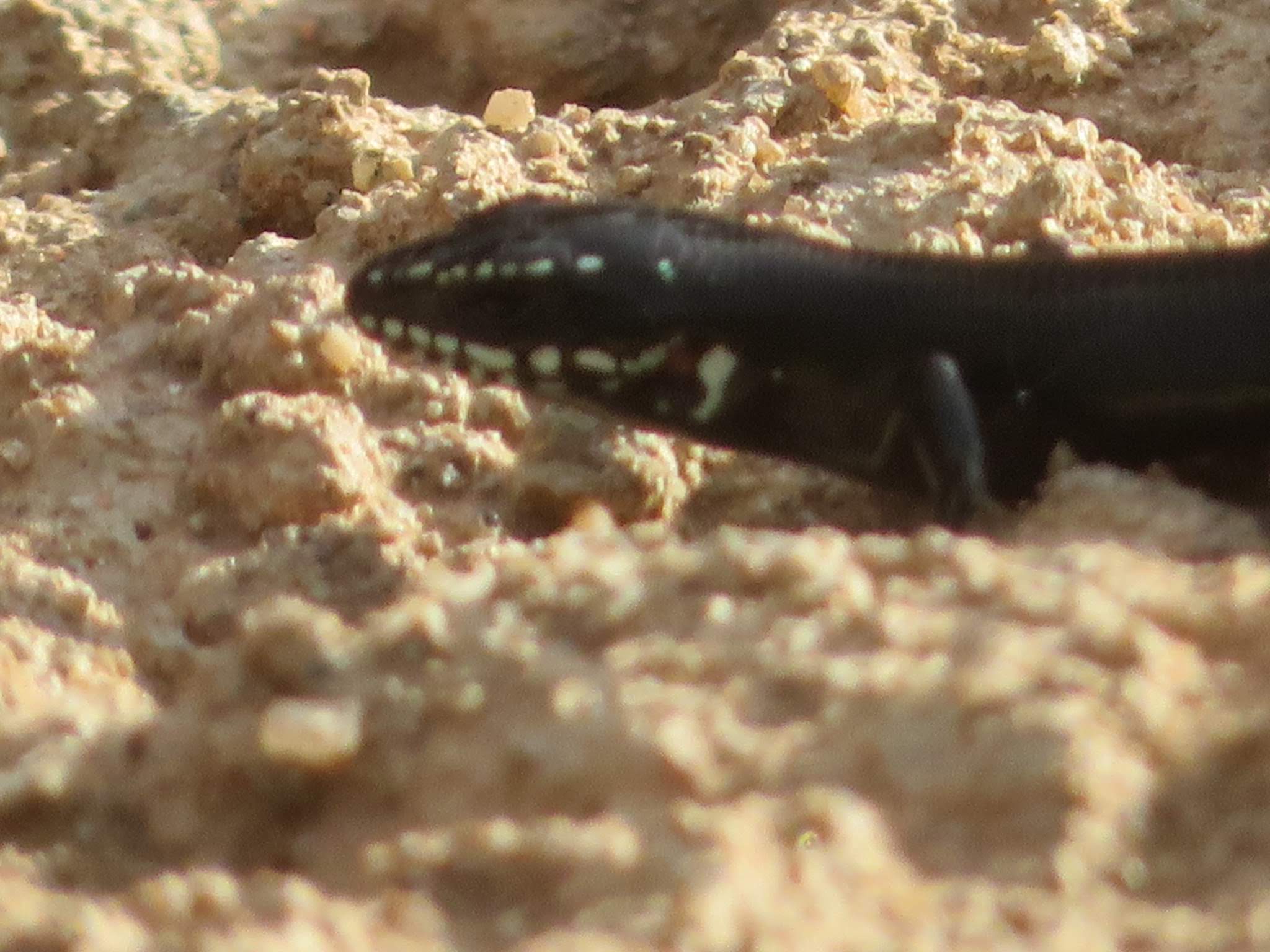
New to the herpetology line up are these juvenile skinks. The are dark colored, with bright blue tails. They grow into large, brown, sleek lizards with tiny legs.They move very differently from the other lizards however.


Saturday, July 24, 2021

debris

Living in nature is not neat, or comfortable, or predictable. Services like water and power are not automatic. The weather throws surprises. Even worse is the predictable "yard waste" clean up after a flood or winds, and the mud.
In nature, things are rarely where they are "supposed" to be. However, finding the unexpected is why it's worth it.
All caterpillars are bulking up as the nights cool again. But these guys are the heavyweights. A sphinx moth caterpillar. It appeared under some elm trees after a hailstorm. On my nature walks, the biggest caterpillar can be larger than the smallest snake!
This is not a sphinx moth. It is a pink sweetheart moth and is huge (width of your hand). Not the biggest, but these very large moths are appearing now for a brief period. The rain usually puts a damper on the moth numbers and varieties, but the ones you see are pretty breath-taking. This species has bright pink underwings.It flashes the color as a "dazzle" while it escapes.
Moths are camoflage and dazzle specialists. This one is easy to see on the "wrong" background, but it could also easily pass as a dried leaf if it changes the outline to being more irregular. The soft fur fringes along the trailing edge of the wings deadens the sound of flapping. The wings themselves are covered in tiny slippery scales that absorb sound, too.
At night the moths fly to the flowers, but they shelter in the leaf litter during the day. You can often hear loud rustlings in the undergrowth that comes from the noisy towhee birds as they shake the dry leaves. This behaviour is to try and scare the moths into flying away and revealing themselves. While moths have no stingers, some species often squirt a foul goop to distract predators as they escape.
The sunflowers continue to provide abundant pollen for all insects. Native bees are covered in pollen. In this picture you can also see the tiny flowers clustered tightly. The seeds will grow below these flowers and feed songbirds and other insects long into the winter and the following spring.
nature can be very annoying, especially to an amateur. This beautiful hognose snake was not going to wait around for a photo op, and rushed off the dusty trail into a clump of grasses. There, it tied itself into a writhing, ungrabbable knot. These snakes often play dead and poop on themselves as protection. They rarely use their short fangs, and their bite is barely venomous. They are usually very mellow and easily handled. This one was far more active than is usual. As it was clearly not in the mood for socializing, I took the best picture I could, and moved on. Snakes are not bad guys.
A good story always needs an awesome villian. Here is one of the best; meet the adult female squash bug. An indestructable, proliferative monster. These bugs are impossible to remove from soft young plants once they begin to hatch. They stink too, and move just like an evil monster should, all jerky and unpredictable. They grow to pretty big sizes, and become pests on all the prize plants in a vegetable garden. It will not mattre what you do, they are unstoppable. They wither away the green produce long before it can look facebook worthy.
Never underestimate good public relations. This bug also stinks, is prolific, and the larvae are ugly. It is also a destructive insect, but only kills aphids. So humans grow and release these insects in large numbers. Helps to have friends who write storybooks about you.
The trumpet flowers attract great numbers of insects. This yellow spider crab sticks out a bit, but I have noticed these arachnids will hide under the edge of the flower's edge and ambush anything. This small bee is not going to get the chance to learn to avoid it.
This day lilly's ancestors were likely in someone's garden. Now it grows wild along the side of the road. Roadside verges are unique enough that they could be considered their own ecosystem. Tarmac has many challenges and benefits for life.
I don't know what this plant is, but it is growing in the cracks of the asphalt. Few other plants have the ability to grow here. Without any competition, this plant is growing fast. But notice the blades of grass that will eventually outcompete this plant.
But grow too fast, like these sunflowers, and those top heavy plants will topple as their shallow roots are ripped out of the ground in high winds. This lack of space for roots is often why trees fall in a forest, but not at the forest edges.
The rain will lead to an explosion of small winged insects very soon. Once the sun comes out, the lizards are going to be very busy putting a dent in those numbers.
Every animal is better adapted to some environments than others. This mouse was swept into the arroyo by the flooding. They can be strong swimmers, but water is not their natural habitat. People's houses usually are.
The hallmark of biology, what it is famous for, in fact; is the ability to adapt. This coopers hawk is well known for being a bird catcher. This one was acting oddly, so I took some time to study the behaviour.
Turns out, today it was hunting cicadas. It took 20 minutes to eat this one. It holds the carcass down with those yellow feet and plucked out the gooy bits very delicately. Nature surprises in all it's nuances.