Translate

Monday, February 22, 2021

invasion

 There is a lot written about how bad invasive species are. But because in biology everything is interconnected, a bad thing in one area could be a good thing for something else. This is especially true when viewed overlarge timescales.

During the morning walk, there has clearly been a change in bird behavior (as measured by perching and singing) where the prime real estate spots are imported garden plants. The thing in common with all these plants is that they all have good shelter and provide a reliable, if often poor food source.
Not only do these plants help small birds, but they help a whole variety of small birds. This type of yucca is famous for attracting aphids and other insects. Nesting birds of one species can interact with insect eating birds of an entirely different species in a community.

this flock is simultaneously warming in the sun, feeding, watching for danger, establishing "pecking order" for mating rights, and scoping out future nesting sites. Evergreen trees like this tree are not found naturally in Corrales.
The trees are bearing fruit, literally. The early pine cones are forming (they are edible; kind of taste like lemonbeecause they are high in Vitamin C). Gender is a tricky subject in plants, these trees can be sexed as male (pollen bearing) or female (cone bearing) but many plants can be both sexes, change sexes or have different sexes on different parts of the tree.Evergreens are a very old lineage of evolution, and have not evolved flowers.

The birds prefer fatty food (almost all birds can eat ground hamburger in a pinch) , but can eat these young cones as a back up food in lean times. These birds never seem to hold still, so after 1/2 hour of fuzzy pictures, I gave up and moved on. The tail suggests this is some sort of kinglet.


Many small birds help each other in keeping extra eyes out for predators, or signposting good perching spots for flycatcher style insect ambushes (perch and pounce type hunting). However, this phoebe prefers to be alone as it hunts over the clear ditch. The red breast is actually a reflection of the setting sun. This is not a rosy finch.

Of course, there is always the risk of predation when alone. This pile of feathers on the village common seems to be where a pigeon was hit and brought to the ground by a coopers hawk, a common bird predator.

Likely the bird that was caught was not under the protection of a big flock. Low ranking birds that forage alone can get more food, but suffer increased risks.
This red tailed hawk is usually more of a ground predator, and several have been hunting in low, lazy circles over the village. Bird colors are confusing, the "red tail" is not actually seen on this one; a "dark morph" apparently. I'm told the dark bar on the leading wing edge beside the head is characteristic. Notice the short, broad wings, this type of wing is great for low, slow maneuvering close to the ground.
This flock of gulls show the opposite wing style; long thin wings designed for jaw dropping globe travels as they travel in search of the "eternal spring" where the best food is available with the least adaptation to climate. The climate is definitely changing quickly and that is affected by human activities.

Of course, so many people forget that human activities are still the most invasive. The windy weather of the last few days actually helped small mammals by making things hard for predators that fly and use hearing to hunt. The smaller owls adapt by getting close to the ground, but this one lost by being hit by a a car. Many animals have not yet adapted to human activities and from an animal's point of view, moving cars must be very confusing.

Several groups report birdstrikes have begin (they get more common as the weather gets warmer) and owls often can be saved if they are brought in for care, but we have very little idea how many strikes are not even noticed. If you notice an injured bird please call for help:

On a Wing and a Prayer: (505) 897-0439. Local

Hawks Aloft (505) 999-7740. 24/7

If the above picture was upsetting to you, you could always do something to help by donating to a local wildlife charity.

Friday, February 19, 2021

cold

There certainly is a lot of red tailed hawks around right now. This large female frequents this area during the summer, usually. A nice picture, but she was not too happy to be photographed
The ravens have stopped congregating by the river in the evenings, though they still fly overhead, heading southeast. They have been replaced by small flocks of doves.
Living among trees has its downsides, such as the need for trimming of large mature tree branches. Cottonwoods are pretty notorious for shedding large branches in the winter. But all trees can snap limbs if the freeze is severe enough.
There are many spiders out before the summer's ants. Those two species don't seem to get along. This is a Parson spider, apparently the thorax looks like a Parson's collar? They are very common.
The number of gnats on the house walls is surprising large. I collected a large number to feed the frog of the house.
Out in the forests and deserts, buried underground somewhere are a large number of amphibians, who are still a long way from waking up but will snap up large number of gnats when the time is right.

shine

The forecast is for a warm and dry week ahead. The bird migrations are continuing and most of the canada geese have already left. The woodpeckers, flickers, robins, and others are becoming rarer to see. The sandhill cranes are still around, but likely not for much longer.
however, there is a lot more of these birds, which I think are female blackbirds, according to Inaturalist, but I'm not sure yet. Several large flocks are hiding in the cattails on Scuzzy ditch in the morning. They make large rustlings, but unless they flee, they are very hard to spot in the closed canopy.
Many times there will be arguments with amateur birders on what type of raptor they see. A lot of the time, the behaviours alone will be enough to suggest the ID. But here, the bird was kind enough to display the wide, red tail. This is a red tailed hawk, lazily swooping in low big circles over the clear ditch. As summer advances, we should see these birds move up into the scrublands and switch to a more rabbit based diet.
There are still some seagulls around, flying between the river and the dump during the day. Likely they will follow the Rio Grande river down to the sea pretty soon. Many birds need a visual navigation cue to follow, even though some are famous for following earth's magentic fields, the stars and other methods scientist barely understand yet.
Part of a recent discussion was "Is that a shoveller? Or is that a cinnamon teal?" the answer, of course is both. Teals are a type of shoveller duck (Genus Spatula) which in turn are a dabbler duck ( behaviour the duck in front is demonstrating). Teals can  be many types, but on the Sandoval lateral canal we have the green wing teals, and the cinnamon teals. Confusing, huh?
While I was expecting a few insects to come out. I am always amazed about the hidden world of bugs that surround us. It takes a lot of patience to get to see this world though, even more to understand how these different worlds; the micro world of bugs and bacteria, and the macro world of geography and weather, can interact with the small slice of the earth that we recognise. How can these leafhoppers be out? Where are the leaves they should even be on?
Now these guys are easier to understand. The flies live in the cracks of houses, they come out as soon as there is sunshine. They are sluggish, nothing like the zip they have later in the year.
They are easy pickings for these birds. Most birds with small, thin beaks are likely insect eaters.

Thursday, February 18, 2021

wait

In Derbyshire, England the farm cottages are squat and dark timbered in the deep winter. Each one has white smoke coming from the chimmney. Each one also has a weathervane next to that showing the cardinal directions and the direction of the wind. This de facto weather station works pretty well actually, you've heard the jokes; (if it's white, it's snowing, if it's missing it's blowing).
Even though Derbyshire is 4,866 miles away, I feel the connection looking up at this example of a Corrales weathervane and smelling the pinon smoke wafting between the cottonwoods. This bird always perches at the same place, and is the biggest one of the four that frequent this area. He looks East in the morning, and North in the evening, but only on still days without wind.
As usual, the tracks in the snow show mammal activity during the night and early morning. But the only thing activity during the day are the birds. These raven give great profiles against the light sky. This weathervane is the look-out for the flock that is on the ground on the look out for burritos on the Corrales village green (Another link to Derbyshire commons)

I rarely see ravens interacting directly like this pair, the one on the right was preening the other, which seemed mostly annoyed by the interaction. Eventually the suitor flew away.
Not finding any burritos, the flock saw a predator (me, and two leashed dogs) so took to the trees and foraged among the cottonwood buds. This is their survival food, like the porcupines that eat bark, (mostly just to pass the time, as far as I can tell).
Gophers and voles do not rest. Underground their activities are in overdrive as they clear out dens to keep the fleas and ticks under control and open new larders that they has filled last summer with hay. This mound shows the old mound on the left and new dirt brought up from below on the right. The peek hole is in the middle. They use this to poke out their whiskers and nose to check the weather. The New Mexico version of groundhog Phil. If the furry bundle comes out enough to see it's shadow, it runs the risk of one of a host of predators plucking him out of his warm burrow.

Wednesday, February 17, 2021

melt

 I blog because Corrales scenery is free and I am in a year-long, and boring pandemic lock-down. I am not a professional writer or photographer (not too hard to tell). However, I know a few things about nature, and as I learn I like to share. I specialize in watching the changes of nature over the yearly cycle. This is the reason for the title (Phenology)

The reason I'm writing this blurb, is that over the course of the last year, the stats of this blog site tell me that over half of all readers of this blog are local residents on Nextdoor app. So most already know Corrales is great. Everyone else just want to see cool pictures. The vast internet universe can document the most obscure and esoteric parts of nature watching but this scale of information production can have a nasty downside too. The internet has a bad habit of trending everything towards the mean. People expect to see certain things from a small blog about nature. Not going to happen. I write what I like (for about 2 hours a day).

However, I still appreciate those who also like what I cover. It's even greater if people leave a comment. Special thanks to those who have signed up for updates. That number has doubled over the the last 2 days! (There are now two people). Thank you, really.

This bird couple are looking for water, which is hard to find in the early morning after a freezing snowstorm. They are Western Bluebirds, the female is looking at the end of the hosepipe for the first signs of melting ice. They came back after I had melted the ice with some hot water.
 I have mixed feeling about stagnant water in bird baths during the summer. But right now, the birds are far more excited about water than food. While many of my photos of birds are fuzzy (no joke; about 80% of my bird photos are off focus. I can't get a crisp picture of the fluttering beasts). This American Robin came out pretty well.
Most of the birds that use my seed feeder seem to prefer collecting it off the gravel. This can be a problem as that always brings in squirrels. I also don't like the "unnaturalness" of the pictures, but they are easier to take; especially if you can stay indoors on an icy morning! I solved the squirrel problem by staking out a carrot. The squirrels are WAY more interested in the tethered root vegetable than in messing with the bird seed and the birds. Chew toys for rodents are cheap and disposable.


Humans affect the natural world in so many obvious, and less obvious ways. this highly visible fishing float reminded me that there are likely many birds who will die traveling north because discarded fishing tackle and hooks prevented them from collecting enough food fuel to complete the journey. (Warning, graphic link follows:) Virginia Wildlife. Public information announcement

The freeze last night was not actually very harsh (I saw no new tree branches snapped off). But the ducks appear to have been caught off guard. They don't like ice, preferring open, water. These tracks show some ducks waddling across thin ice during a snowfall. Quite a few of them, too.
In close up, you can see the march through the slush. Ducks are able to move on "land, sea, and air" but they are not comfortable outside of very specific environments (six inches of water). They are strong fliers, but only over short, frantic flights. They stand on land well, but these tracks show the "pigeon-toed" trade-off that having big flippers for feet require.
For humans, a different big problem after a snowstorm is the ice that forms when many clomping human feet will compress the snow into an icy sheet that then freezes into a slippery trap. This ice lasts a long time after the uncompressed snow has vanished. Many broken hips and bruises across the United States will be a hidden epidemic this week. Still, the large ice crystals that formed from the slow freezing are pretty, seen first thing in the morning.
The great blue heron is in his usual perch this morning. I've learnt the bigger birds definitely do not like being stared at with a camera for very long. So I try to get my picture and move on quickly. Because of that, I often do not get a very staged picture, which is good. Still, it shows the complexity that is below the unruffled feathery exterior.
I was only able to get one picture of this hawk. Some people think this is an unusual species, but I think it is just a red-tailed hawk. The argument is raging on Inaturalist now. Birders are strange people.
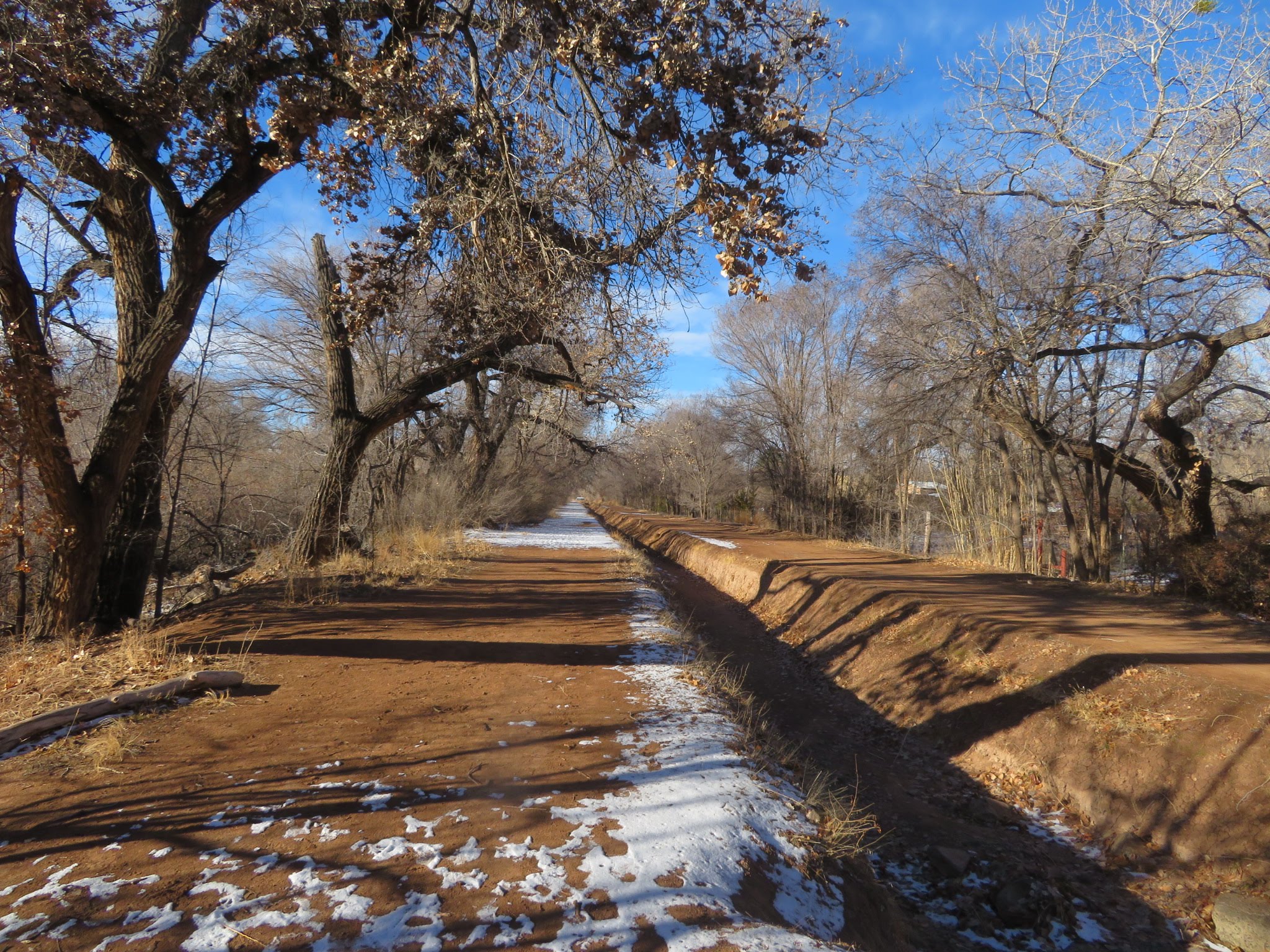
The thick growth between clear ditch and the Sandoval lateral is important habitat for birds. The recent cutting of the willow displaced a small family of snipes, which have moved about 600 feet up the ditch. This photo also shows how one side of the ditch receives much more shade that the other. The slower melting snow is likely to help hydration of the dry soil on the eastern side for a few more days, which could be crucial for lizard and amphibian development.


Tuesday, February 16, 2021

Rest

 More than a few people have been worried about how animals cope with unexpected cold spells. Of course, we only worry about some animals. This cold snap is perfect for reducing the spread of certain wood boring beetles, even as it will kill large numbers of developing buds from many types of trees.

As I've lamented before, the active animals in winter are mostly all birds. The good news is that during snow-falls I can confirm they seem to be doing just fine. This flicker was getting a drink from the river, usually these birds never hold still, but this one was looking pretty mellow, while warily keeping one eye on me. The crisp air was very still and quiet. The sticks the bird is sitting on is the beginning of a beaver dam that the large mammal will likely get back to working on this evening.


Unprecedented snowy weather in the area suggests we should have a good snow pack for the summer growing season. But this could also be a bad thing if that water combines with summer monsoons to cause flood conditions. Areas of the state like San Acacia (beautiful place, but if you go, be prepared; it's rough) still suffer from farmland flooding along the Rio Grande. The city of Albuquerque is between two dams; the Cochiti and Elephant Butte. These help control water flows, but also causes erosion problems in Corrales.

Many animals rely on wetlands and flooding. Those dams allowed development to occur along the river since the 1930's, but also caused the extinction of native species of large fish such as sturgeon and gar that used to exist in the Rio Grande. Other animals, such as the silvery minnow only survive by large infusions of money and manpower.

The wetlands that are left do still support many species. This heron is in his usual resting spot. He seems to be a little late starting his fishing routine today, but given the lack of dogs and people, he is probably giving up prime fishing time.

The doves moved into the bosque in large numbers recently, probably to take advantage of the large numbers of bird feeders in the area and to nest. This one was busy preening under the shelter of a large tree branch. Preening is a big part of all bird's daily activities. Most birds have a sizable parasite population, both on the inside and outside. Bird malaria is one of the reasons that the Biopark's penguins can't be outside in the summer, they have no immunity.

 The mallard ducks are very happy right now. It is quiet enough during heavy snow that many of them are out on the banks during the day. Human activity and predators like bobcats and coyotes keep the ducks very close to the water during the day. The ducks seem to also prefer to sit under the trunks of trees while it snows, judging by these tracks


The rabbits were out early this morning, trying to find a place out of the snow while close to green grass shoots. Many coneys chose to sit under a vehicle and nibble grass lawns that until recently were being irrigated and growing quickly on fertilizer and weed killer.

The birds in the area continue to come and go across the state in response to the weather and ecosystems. This trailcam is not really designed for small birds, but shows a yellow finch, not a regular visitor to the bird bath. Eventually we should see flashes of scarlet in the trees as Summer tanagers stop by. Right now there are occasional glimpses of the dark blues from bluebirds. 

Everything comes with a downside, and these bird baths can also spread poorly understood diseases, such as West Nile Virus (which we know) and Usutu (which we don't). They need to be emptied and monitored regularly. I put a bullfrog tadpole in mine during the summer, works a treat at removing insect larvae.


Sunday, February 14, 2021

snow

The birds are still the only animals out in the snow, they can adapt by trapping warm air close to their skin. The side effect is they all now look like stuffed pincushions.
Another thing most of the birds are doing is using the humans to meet their basic needs. The bird tracks in the snow all lead to birdseed left out by people and snow free areas under carports.
This mountain bluebird has found both food and shelter inside a juniper tree.
This is a new bird for me. A yellow headed blackbird. It also was hiding out in a juniper.
It's pretty different from the more common red winged blackbird that are all at the feeders.
This young robin is drinking water from the melting ice on the road. During blizzards, water for the birds is in short supply.
This bald eagle is cruising for birds weakened by the cold. The white head and large size are clear giveaways. This is the closest I have gotten to one in the wild. Elephant butte lake really is a birder's paradise, even during a blizzard!