Translate

Wednesday, April 17, 2024

sploosh


I always feel like our descendants—they're going to be upset with us for wrecking the planet anyway—but they're really going to be mad that we didn't even bother to take a good picture.          Jack Longino

It often feels like studying nature is like imagining an unseen dimension where connections exist between things that we cannot even identify. Still, we can imagine. The reason we should, is that there is far more out there to learn from that we can find just using our five senses.
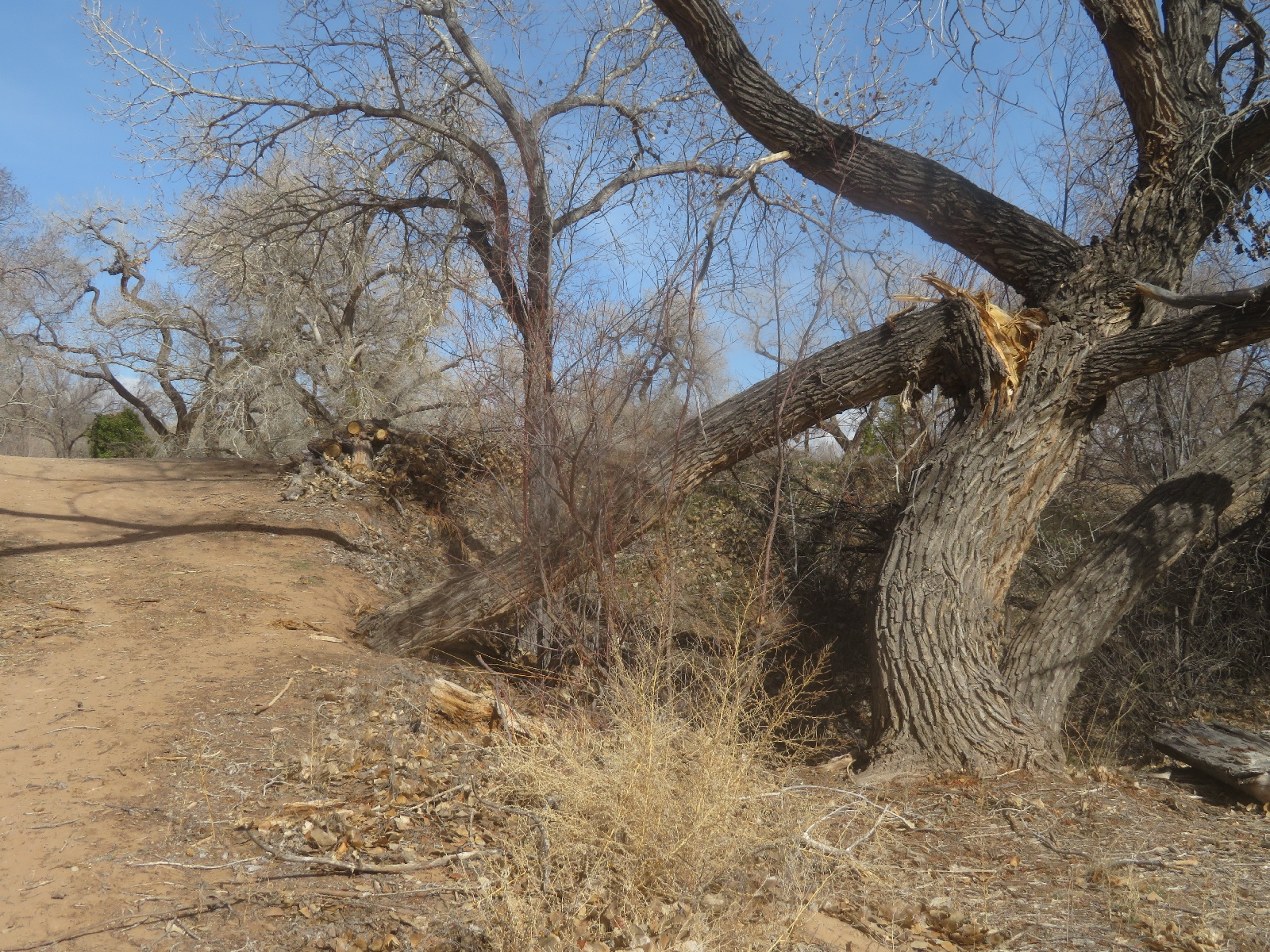
 It is odd that decomposition is a computational and biological term for taking a complex thing and breaking it down into simpler units. By ignoring the relationship between things a process becomes clearer, but the loss of the relationships often means people are looking at the wrong thing. Here, the trees are crowding out the sunlight that the grasses are needing, while the grasses are preventing new sapling for growing. The overall effect is a charming woodland glade scene which many people have been quite taken by.
 
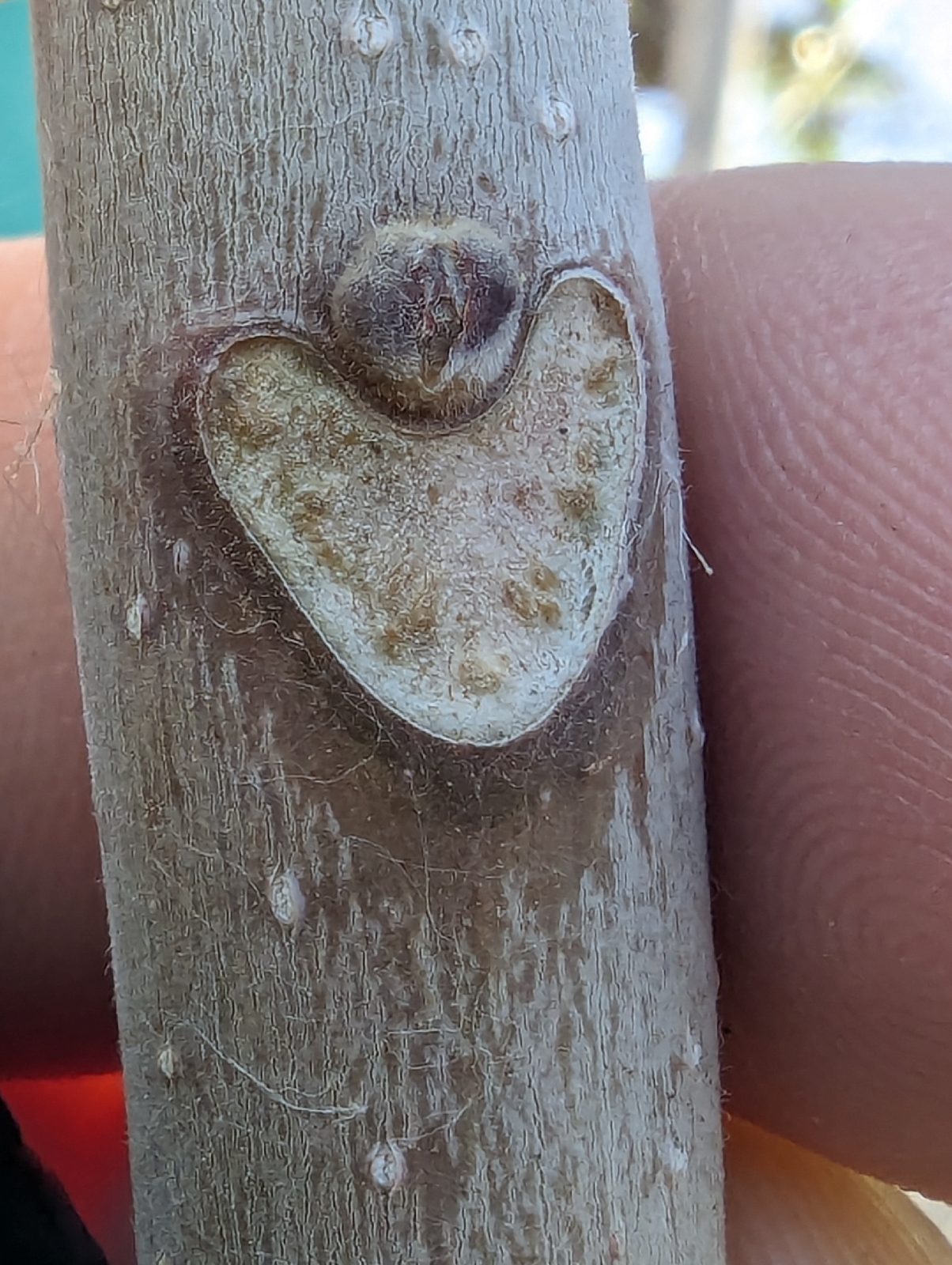
Here is an example of seeing a thing in a different light. This is the abscission zone of a tree of heaven (Ailanthus altissima). Right above it is the axillary bud which is dormant because of the vertical dominance of this species of tree. The whole process is regulated by the relative concentration of auxin. This is the abridged version of the whole story, there is so many relationships to look at in this picture. The biological process of decomposition is personified in this picture of both senescence and fecundity. The computational concept of decomposition (factoring) is the unconscious process all school educated people do, where the picture is broken up according to a paradigm to be understood as objects that interact is some predefined way.
Yet most people just appreciate the symmetry of the cells producing a picture of a heart. While others wrestle with the false dichotomy of whether the tree of heaven is a great fast growing garden tree, or a noxious invasive species.
Barren sand is the trademark picture of apocalypse movies. But some plants see this as open real estate ripe for exploitation. This is the Russian thistle plant, which took over the midwestern plains in the late 1800's. The human plough and following development removed competing root systems and dried out the soil, allowing the deep taproot of the seedlings to rapidly establish a toehold. The radicle pushes downwards rapidly and responds to the conditions it finds, so both intrinsic and extrinsic factors affect taproots versus lateral growth.
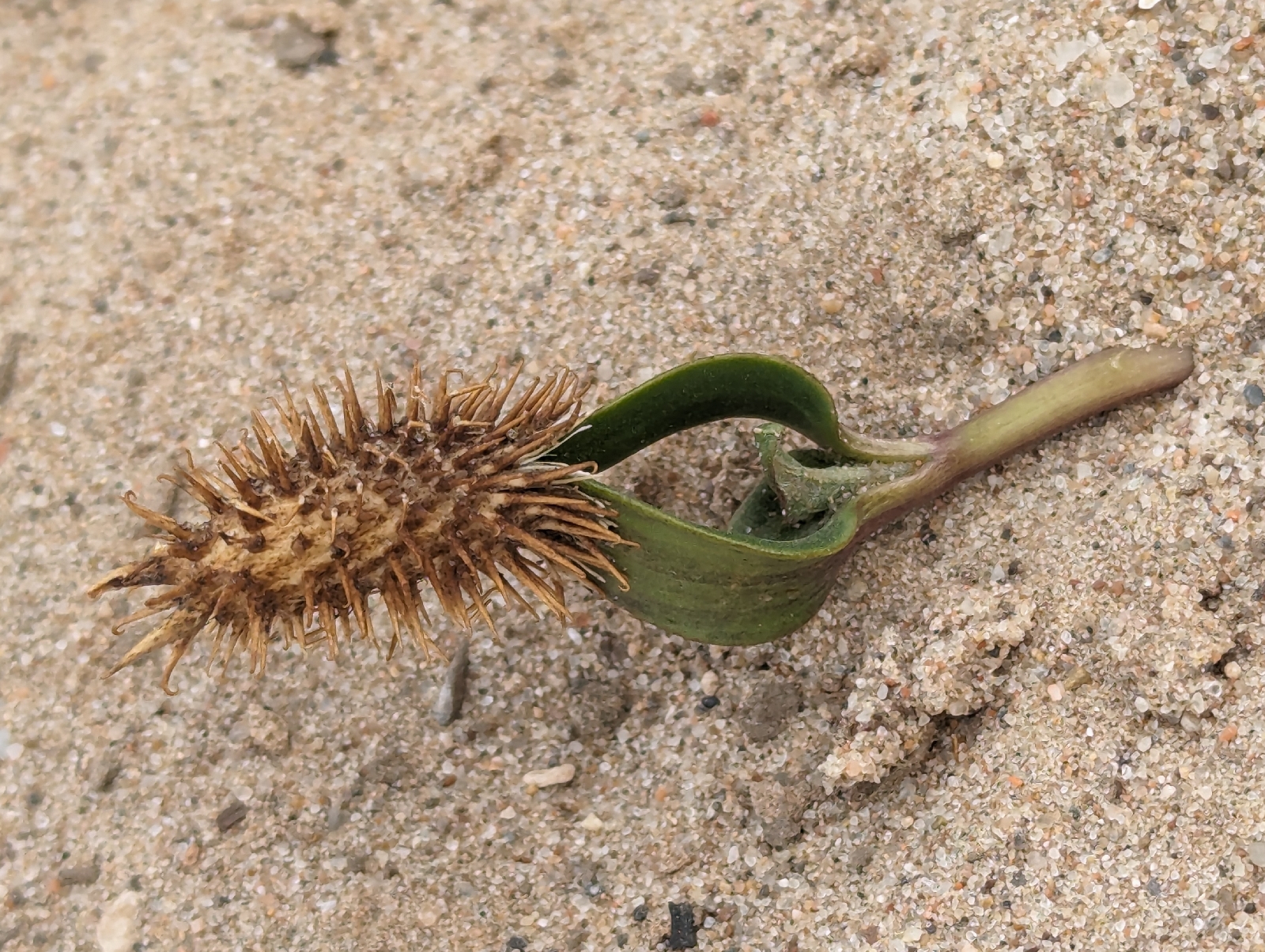
Cockleburrs form large seeds that stick to animal fur to travel. Here you can see the release of the seedling from the distinctive seed casing. Those two "large leaves" are actually cotyledons, a type of storage vessel. The true leaves that photosynthesize are the tiny ones inside those. Cockleburrs have been studied for the toxic substances in the seed, the oil, and the adhesive produced by the spines. Most people know the seeds are the inspiration for the idea of velcro.
 Rains and snow form the source of water that eventually makes its way down to Corrales. Even though it doesn't look it, the Rio Grande is the fifth longest river in the US and has a watershed that includes eight US states.
 
There is a lot of fish in the Rio Grande, but the diversity is nothing compared to what there used to be. The clay silt caused by near constant changes to the river level (causing erosion) has caused many fish to become rare, and other fish to dominate. The grass carp live in the turbid, alkaline and clay silted waters of the main river. They often will swim into the drainage canals of Corrales to feed in the warm, shallow, acidic, sandy, and clear waters of recently inundated areas to feed and breed. In the past there have been many other fish species, but these have mostly vanished since the siphon irrigation water was cut off two years ago at the north end of Corrales.
The abundance of ecosystems in the relatively unkempt Corrales ditch verges house an impressive number of bird visitors. Egrets normally don't stalk the drier parts of Corrales, but they can be seen. The cattle egret hunts insects and anything else in tall grasses. Large numbers are currently roosting at the Tingley ponds but they like to check out the inundated fields for slow lizards at this time of year.
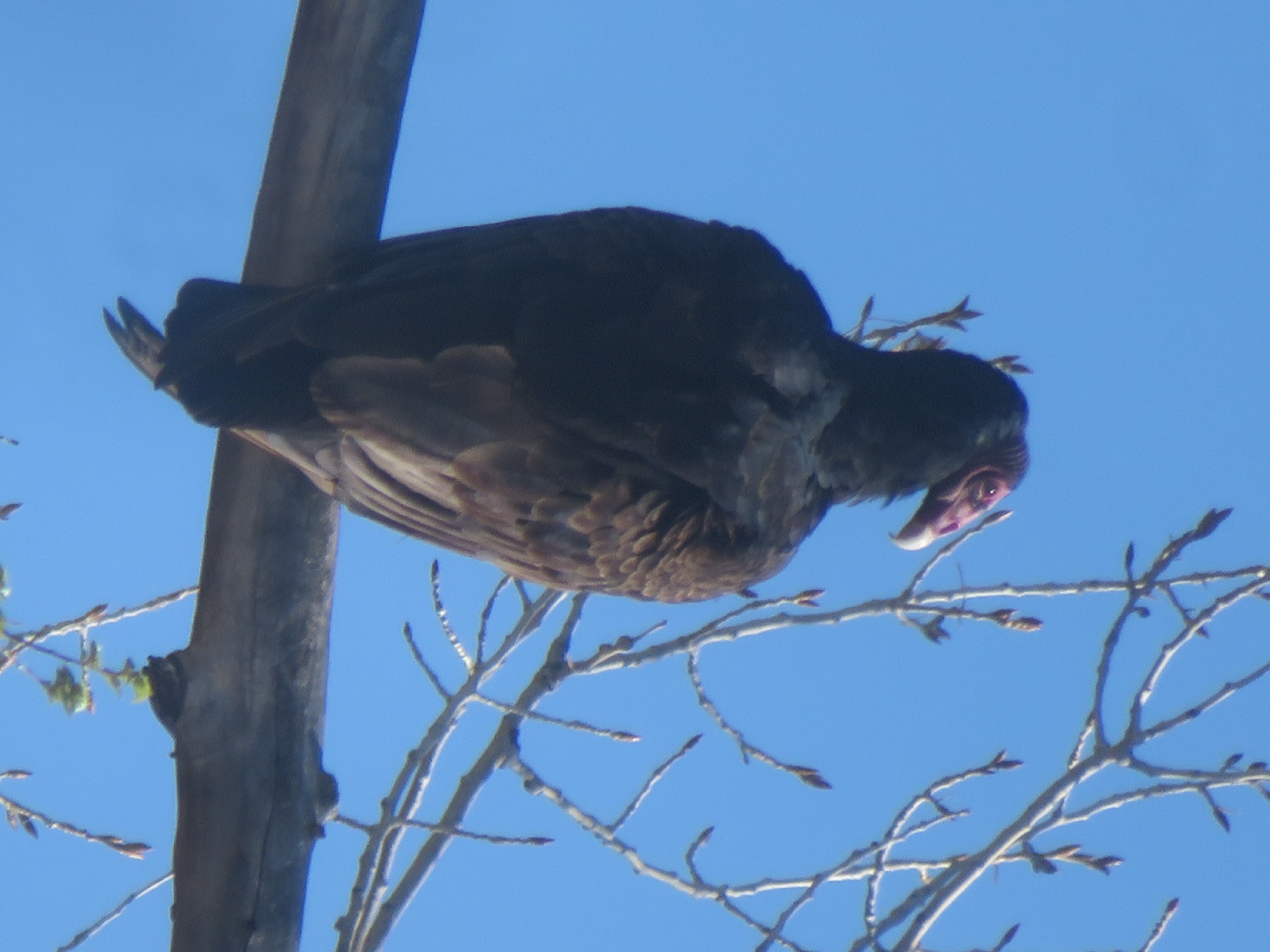
Turkey vultures visit the bosque to rest as they are not great fliers when conditions are less than ideal. Their appearance presage the hummingbird migrations who have just arrived. Vultures usually do not stay long in the wooded areas, preferring quieter locales out in the open plains and hills to the west.
Coopers hawks in the area are engaged in nest building and courtship. The males are often on sentry duty near to the nest and chirp out warning and probable blasphemies when vehicles and other birds pass by.
As the number of coyote visits decrease, the flock of feral turkeys has become more active, especially in the middle of the day in fenced wooded areas that are free of pets. Their gobbling calls can be heard in the mornings as they travel in a flock of about eight individuals along the lateral ditch. As usual, the research on leucitic (not albino) birds is speculative, and suggests that oddly colored mutants reduce breeding stress in social birds like turkeys.
The elm seed snow is on us, most will not germinate due to the dry conditions they land in. Carpenter ants and mice often snatch many and store them underground. The elm seed bugs proliferate in response, with the eggs being deposited on developing elm seeds.
Periwinkles are grown as a ground cover plant in areas with high acidity in the soil. They would be invasive if the native soil was less alkaline. The flower is admittedly beautiful, but then there are also so many other native candidates. This flower is also repellent to many browsing species like rabbits or deer. A flower with five leaves exhibits radial symmetry, which allows pollinating insects to approach from any angle and have the same view of the identifying colors and features. Other flowers which have a bilateral symmetry need to be approached from one specific angle and usually have a specific, co-evolved pollinator.
 
Studies of patterns in nature are not just abstract concepts. Patterns are how plants and animals communicate. Spirals seen in disc phyllotaxis are efficient packing arrangements that emerge spontaneously and have helped guide human understanding of mathematics, which is just another form of communication. Asters, like this salsify flower, guide insects to a central platform. The outer petals are called ray florets and are just advertisements of the health, age, and species of flower. The disc florets at the central are the male and female flowers that appeal to any insect that has short, generalized proboscis. Many asters become locations for invertebrate mating later in the season, exactly like a human dance floor in a popular city party spot.
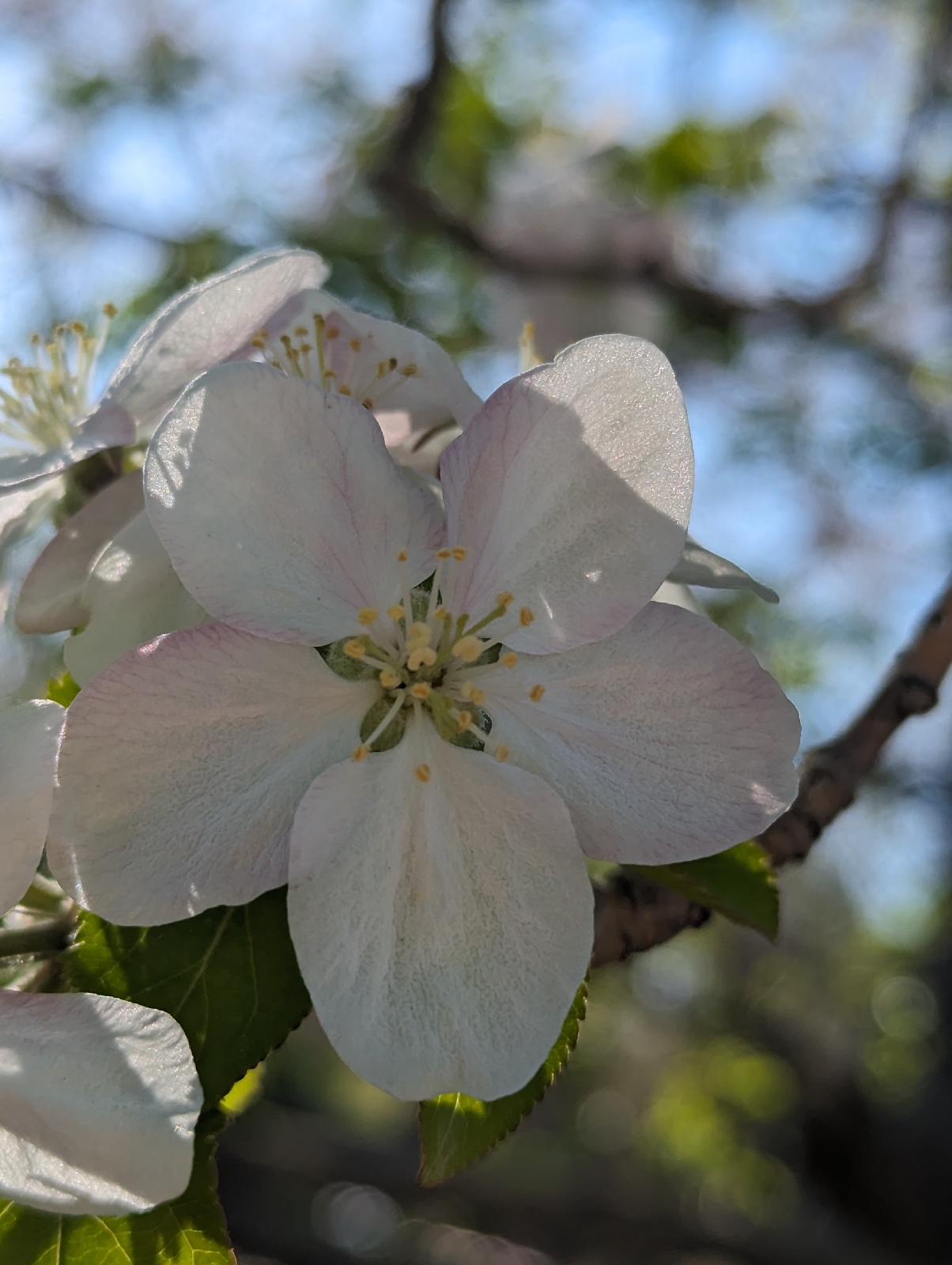
With the recent record high spring temperatures, many stone fruit orchards should do very well in terms of fruit production. There are many small trees around Corrales that can yield apricots, cherries, or apples and most of those are blossoming now. With the last freeze past here will be an explosion of color all over central New Mexico in colors from purple, white, pink or yellow.
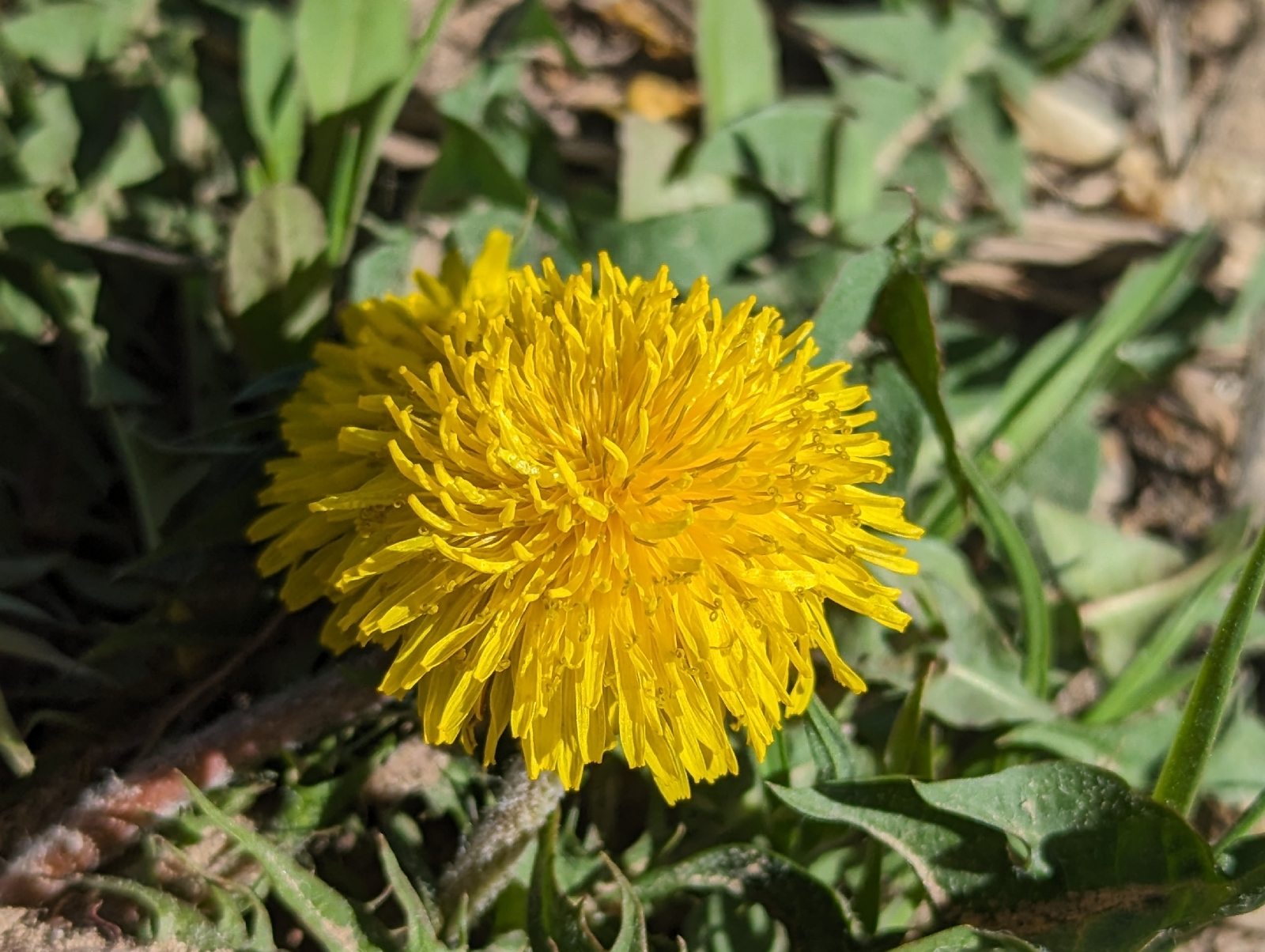
With the explosion of lawn culture in the 1860's in the US dandelions became the enemy, but they cannot be eradicated with herbicides or many lawn management strategies. They love bright sun, they have large taproots that mean they can live in compacted soils and can regrow easily from this root. They are also very flexible. There is a Scalesia species in Galapagos that evolved from a dandelion ancestor to form tree forests.
Pappus and Apomixis are not common words thrown around much by general biology readers, but everyone who tends a lawn knows about the effects of these words. Pappus is the unique seed of the dandelion that allows it to use winds to aid in dispersal. Apomixis is the asexual reproduction that can occur in some aster plant species like dandelions. While there is a loss of diversity from clones, they can rapidly spread into new areas if the conditions are right, and there is increased importance of environmental fitness from the original progenitor.
Silverfish in the wild hide under large logs where there is more moisture. They feed on starch, so the abundant elm seeds are a boon for them. These insects live for several years which is a long time for an arthropod. They undergo many molts during their lifetime which means they are resilient, able to repair a lot of injuries they might face.
 
It is always amazing how much goes on under the surface of the earth. These white grubs are the bane of many a gardener, they are the pupae of the scarab beetles that feed on shallow roots in lawns and gardens. They are much prized by skunks and turkeys, but are a cause of much garden spraying for pests
The larvae of the crane fly is also an agricultural pest but have only been found in the US for about forty years. They are among one of the oldest fly species, having been around for 245 million years and so have had a chance to spread to most parts of the globe. A lot is known about crane flies, mostly because one man studied and identified almost 11,000 species.
Spring is a strange time for many reptiles. The daytime highs are perfect for basking, but the nights are still cold. This means lizards are still sporadic in the bosque and have to be constantly moving to regulate their internal temperatures for activities and feeding. Still, this one looks very content in the sun, and their many natural enemies, such as snakes are not yet active.
Personally, the appearance of spider webs in the morning sun and strung across trails is a clear sign that spring has sprung. I notice that these arachnids predominate until the ants take over with their superior numbers and activity. This type of spider prefers the crevices under logs and tall grasses.
 Cobweb spiders are very different and prefer to live in dry, dusty corners of people's houses feeding on tiny midges and fruit flies. Very shy and completely harmless they are preyed upon by the daddy long legs species of spider.
 
 There are many dangers around human habitation. There is a cost to be paid for the increased shelter and food found near humans and often this is the dangers of cars and domestic pets. Humans are not very good at controlling nuisance animals, but we excel am manipulating whole ecosystems, usually completely accidentally. While this mouse may have been run over, the missing head suggests a saw whet owl in a hurry.
 
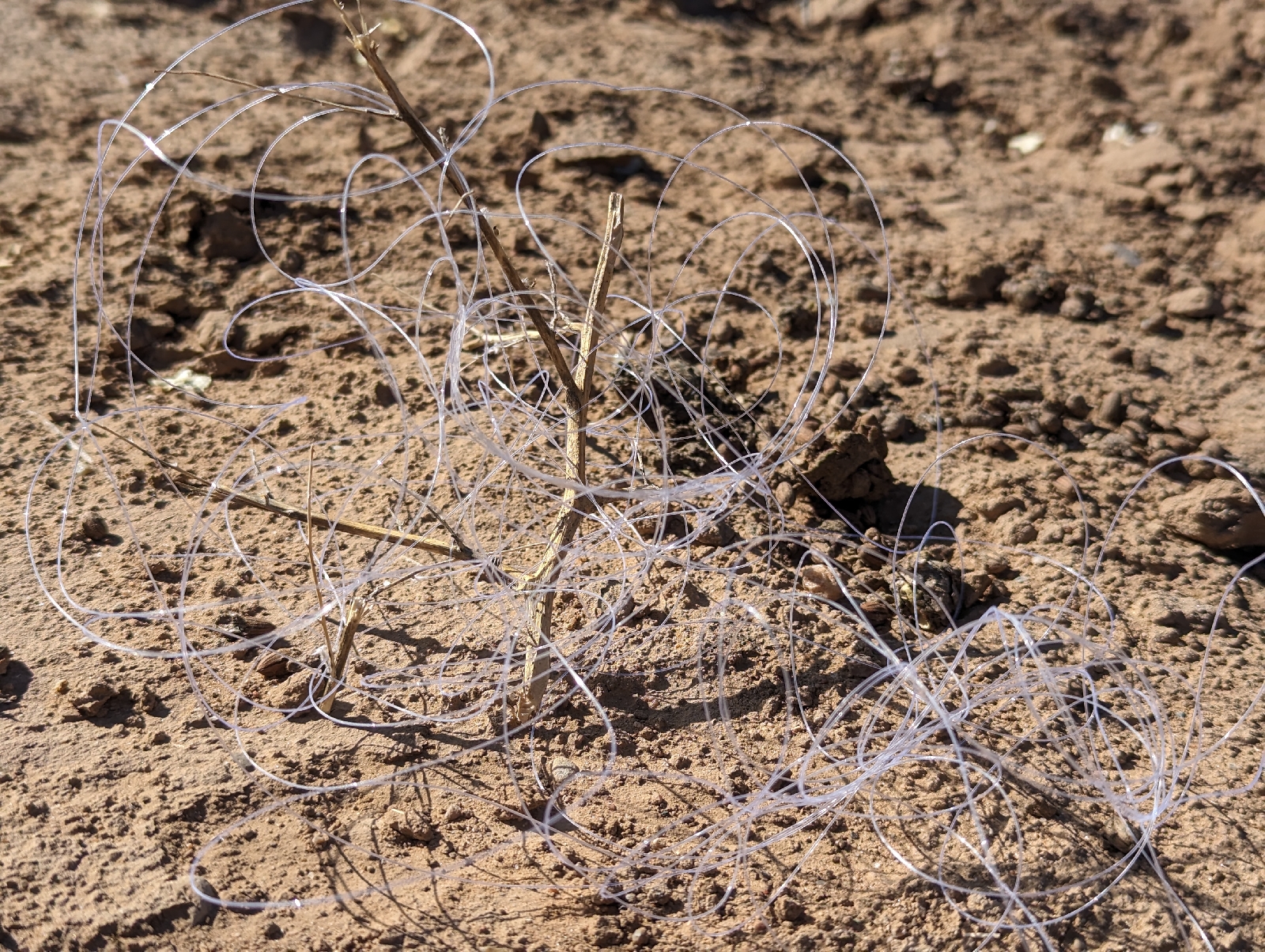
Now there are fish in the ditches, the fishermen have begun trying to catch them. Their extra bait often attracts animals out into the open, but its the abandoned fishing line that often snags birds and other creatures. These unseen effects on our backyard affect everything in the bosque and can be quite affecting. Still, it is the secretive nature of the bosque that makes the unraveling of these layers of nature all the more worth it.

Saturday, April 6, 2024

Spread

 "Yellow is the sun, the giver of life; green is the hope, the promise of what will be." - Oscar Wilde 

Spring is a season of vivid colors. In Corrales the stark black and white of winter is sloughed off to be replaced with bright yellow flowers, red catkins, green leaves, and blue skies. While there is change in all seasons, the differentiation between spring and summer is the most stark. There is change as bird and insect migrations happen and new forms appear. Human work their changes upon the soil and animals start preparing for the breeding season.

There are yellow and red catkins all over the ground right now. These are wind pollinated flowers that appear just as the windy season is peaking from the unstable air vortices that form off the jetstream north of New Mexico. Catkins are specialized structures for pollination common in early spring and in areas with sparse trees.

Here, you can see the catkin tightly packed in the bud scales of the western cottonwood. The exact nomenclature is important, but only if you are a botanist.

Nesting season has started. This means different things to different birds, but overall, means a lot more birdsong and activity. Kingbirds are very "assertive" in protecting their nests and territory and are often seen dive bombing potential predators or interlopers
 The towhee is assertive in a different way. They are noisy, often heard rustling in the leaf litter or calling loudly in response to other towhee. They have vivid colors, including red eyes in breeding males and appear to completely ignore nearby pets or humans.

Wood ducks are small and shy, which is odd in a duck that looks as brilliant as these do. They are very expressive and shrilly whistle at nearly every disturbance.Although they do not quack, only female mallards do that. Children's bedtime story books do not get ornithologically vetted.
Wood ducks have a name that is very apropo. They have clawed feet to help grip rough bark and are often found in trees, sheltering from ground and aerial predators. Often the loud male gives away the location of the more cryptid female.
 Mallards move in as soon as irrigation begins. They thrive on open, marshy ground. They are well fed by humans on white bread, but like to root in the mud to meet the requirements of "enrichment" in zoo-keeper parlance. They need this form of activity to be successful in breeding. Mallards are the originators of the domestic duck species so have no trouble reproducing in altered habitats, which is a euphemism for domestication.
 
Turkey vultures are one of the more impressive birds we see in the bosque. This small family group got caught in a rain storm while migrating north. They took a overnight break because they are not strong fliers in wet, cold, windy conditions. They are very intelligent, adaptable birds who are closely related to stork species.
Coopers's hawks have adjusted to living near to bird feeders and thrive on the abundant mourning doves. They ambush in thick cover and the smaller males are often heard calling warnings near to where a female is nest building. They have a distinctive long, banded tail.
 Red tailed hawks often perch in open view now that the crows and raven have reduced their constant harassment. Because they are specialized to pounce on poorly visioned ground mammals they don't have to hide quite as much as the coopers. That severe brow line that gives them a regal, judging glare also allows they to see well in bright light, just like the brim of a baseball cap.

While the basic needs of all animals remains the same; food, shelter, and stimulation, the focus will change. Shelter from cold becomes shelter for young. Minimum calories becomes extra calories for egg production as well. Activity increases along with anxiety. This pile of feathers shows where a cooper's hawk caught a young dove.

Diversity of plants is important for an ecosystem to reduce competition and have efficient energy usage. Most of the bosque is full of invasive and weed species that are well designed to survive anthropomorphic changes, but with low diversity these forests are at risk for quick collapse when something new comes along, like drought. This is a golden currant, a wonderful shrub found natively, but is often mown down by people seeking to control weeds and grasses.
Plant reproduction gets really complex quickly but is a very interesting subject. How a pollen grain gets to an ovary is a simple, yet very nuanced process. The complexity seems to be necessary to allow an organism to be in tune with its surroundings, be that wind, insects, the host plant, or other plants nearby. Domestication has it's own way of messing with the course of things. I think this a cherry blossom. The blossom is only out for a short time, is easily damaged and dependent on cultivated bee hives that collect pollen, rather than nectar.The science of honeybees is rather dense, but has also become more specialized in commercial orchards.
Mistletoe is an interesting plant for many reasons. First, it is dioecious, meaning different plants are different sexes. The flowers we see in storybooks, like roses or tulips, are "perfect" meaning stamens and pistils are found on the same plant. Another odd fact is that young mistletoe plants have circumnutation action. This means they rotate their center as they grow, and it is not controlled by any external stimulus. It's one reason scientists sent fast growing seedlings into space to grow. The nectar of the flower is apparently orange scented, attracting many species of fly, gnat and wasps.
Tymmetry of flowers is a common reason people appreciate them. This is the common cross flower. Many of these small plants can be found on East Ella outside the senior center building. It has a smell considered by some agreeable (melted crayons) or disagreeable (stale dish rags, mushroom-y) it is another edible winter annual like the more common wild mustard species.
Still trying to figure out this common plant. There are many species that thrive in spite of our ever present war against all things green. The ones that are good at it get to be called weeds.
Many plants people encourage, like this alfalfa. It is grown to save money on winter forage for horses in Corrales. The shoots can often be found on ditch banks near to irrigated fields. This crop grows well in the arid southwest as long as there is good irrigation available. It can be cut from four to seven times a year.
We have a windy season that works very well for wind pollinated plants like pines. the elms also use the summer winds and occasional humidity to release their samsaras. They are not leaves, but seed casing, that taste a lot like snap peas when they are green. in early summer they will rival the cottonwood seed blizzards that follow. Right now the winds are blowing down those that are not quite ready.

Globe willows, like this plant put out jaw dropping amounts of pollen into the unsettled air, but their beautiful yellow canopies compete with the pinks and whites of other cultivated trees. However they then have to shed all those caterpillar catkins, raising the ire of neighbors not well disposed to "litter". There is a thriving market for trees that don't produce flowers, or fruit that can be dropped on driveways, for a price, of course. A simple way is to sell trees that are only male, but they have issues with pollen allergens. It's a complicated world out there.
These are the seedlings of the infamous Russian thistle that spread across the US from South Dakota in 1873. They thrive on loose, dry and windblown soil. Conditions are perfect now for the small seedligs to grow quickly.

The bosque has a wide variety of ecosystems nestled inside its boundaries, like nesting dolls. Areas of bright sun are opened up by human trails which allow the grass light and water in the areas dominated by Russian olive.
Salt cedar trees control their environment with their spiny shed leaves. These leaves accumulate salt, and when they are shed the salinity kills off any young sprouts nearby by salt stress.
The roots of trees harbor a variety of organisms in an ecosystem. This is termed the rhizosphere and includes microscopic worms and insects. These little holes are where some sort of root boring beetle has emerged into the surface world to pupate and mate.
Heavy equipment often damages the surface of the soil, denuding it and preventing runoff from soaking into the soil and being held by various acids. The scars of machine clearing can take many years to become unnoticed again.
Trees are a strange organism in how they can link the sky with the earth's crust. The dark, dank world of tree roots and bacteria is very different than the sun drenched blossoms where this pear flower is found, but the tree linked the two worlds into into one ecosystem.

 Cluster flies are an interesting parasitic insect. They lay eggs near to earthworm tunnels, but the ecology is not very well studied. They tend to be much slower that the more typical flies.

 This is some sort of lance fly, usually found in wooded areas where they feed on damaged plant tissues. They seem to disappear long before the common house flies of summer arrive.

This Sucker species appears to have been speared. Many types of fish migrate up into the shallows of clear ditch from the Rio Grande as soon as the water levels rise from irrigation. Each animal death forms its own stepping stone for other species to continue as the cycle of life continues in a myriad of colors.

Saturday, March 9, 2024

Hope

"the flower is the poetry of reproduction. It is an example of the eternal seductiveness of life." 
                                                Jean Giraudoux

Spring is the time of buds. Flowers come later with exuberance, but also with more variety. Some are raised, or even nurtured, while other blooms are ruthlessly suppressed. Persecuted plants adapt and often thrive, the adversity they face causing their descendants to grow with ingenious successful adaptations that spring from random chance.
Many plants and animals we see are recent arrivals in new places. While porcupines are evolved from ancestors who moved in when South America joined us 2.7 million years ago, the Siberian elms that are everywhere only became prevalent since the 1930's. In the spring, there are often porcupines seen sleeping in the crooks of branches as they feed on the elm's newly emerging buds, and fresh bark.
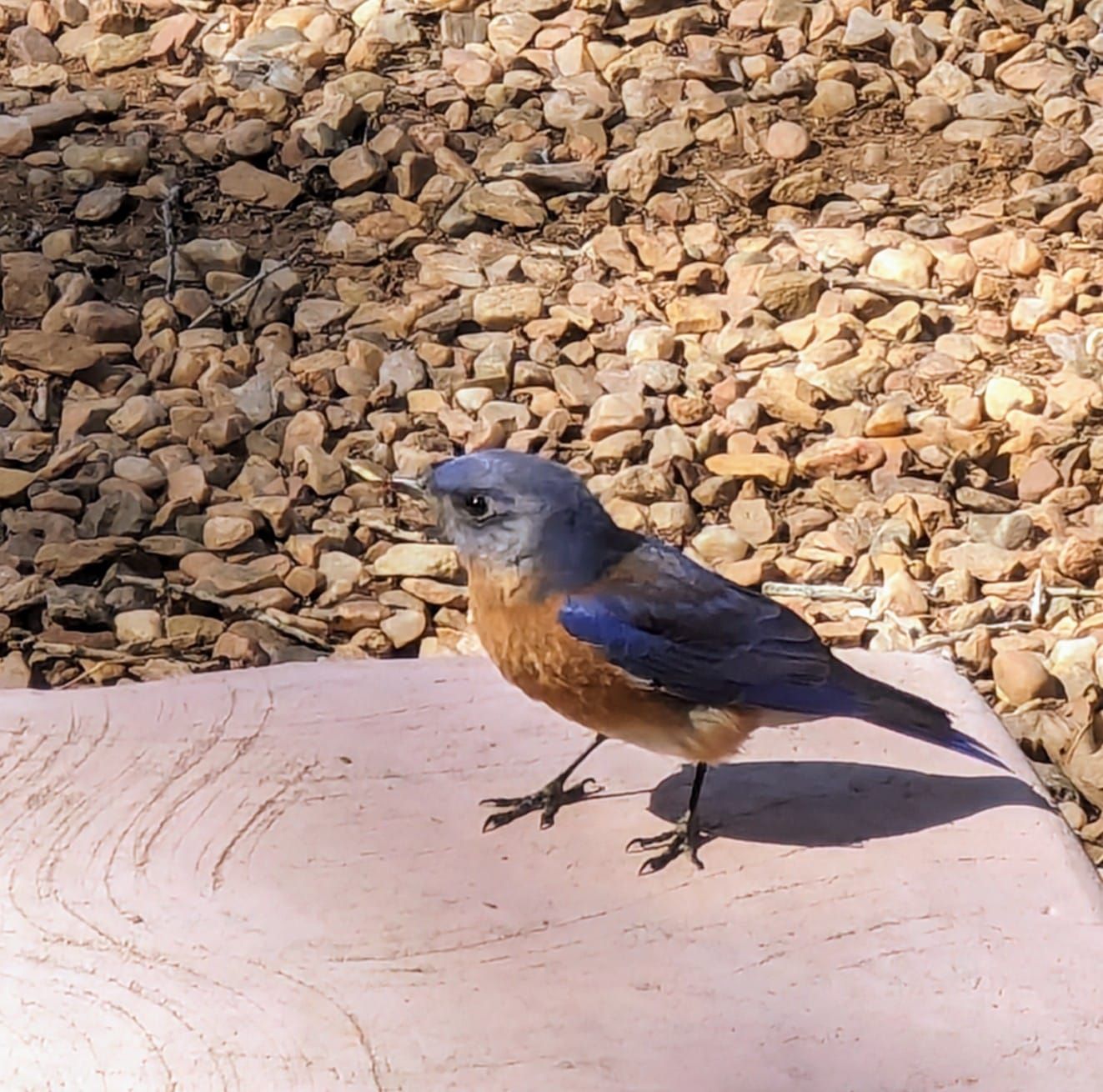
 The western bluebird is a small thrush like species that in New Mexico lives year round feeding on berries and insects, when available. They are often found near bird baths and have adapted to smaller forests like those found in Corrales near the river. At this time of year, territories are being established and nest sites are scouted out. Their songs are one of the many you will hear just after sunrise.

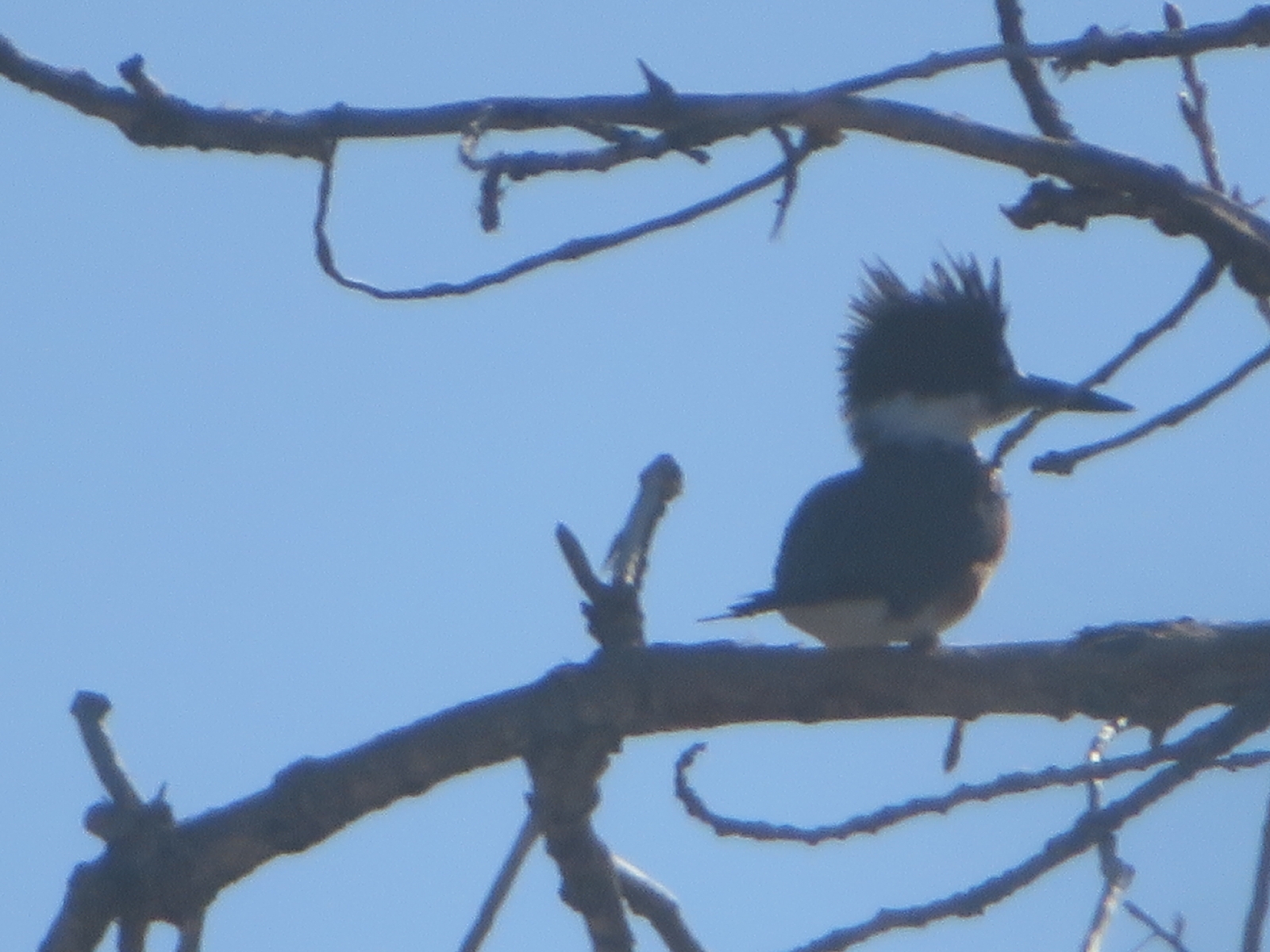
 Belted kingfishers don't stay long in Corrales, they are heading north to breeding sites. They have a very distinctive chattering call. They are attracted here by the water flows and the small wriggling fish and arthropods found there.

Bulrushes are often seen as an invasive plant, but it is an amazing species in it's own right. Control measures are complicated by the ability of these plants to sequester energy in the form of underground starchy tubers. they are also important habitat for birds like the red wing blackbirds. Usually these plants need to be controlled by adjusting the water levels. Burning or chemicals are not only disruptive to others, but also not very effective.
Underground rhizomes are a form of vegetative reproduction that does not need sexual reproduction. This type of growth is fast and simple, but dangerous as all clones are susceptible to a lack of diversity, which helps protect against disease. Many imported plants that grow fast and also easy to look after are also invasive. The arid conditions of western Texas prevented many east coast plants from migrating to New Mexico, but giant cane is found in Corrales in patches, and have proven to be very difficult to eradicate.
Perennial plants use undergrown tubers, or bulbs to regrow after winter. Daffodils are clear sign of spring, the new shoots use stored energy to grow before any seeded plants can begin photosynthesis. The bulb contains a toxin that induces nausea in gnawing rodents.
Desert cottontails are smaller than most rabbits and thrive near to the lawns of human habitation. As long as there are sources of water, there will usually be rabbits nearby. Each female raises an average of fifteen babies each year in several litters, but the average life span is only 2 years. Juvenile cottontail rabbits are important food sources for the majority of animals that prey in the wild.
 
 Last year was a bumper year for cottonwood leaf beetles. The term "bump" means to cause something to bulge and is a now obsolete verb, except in fecundity contexts like gestation and farming. Most years they are very inconspicuous, but they will occasionally have unpredictable population explosions that force stink and assassin bugs that hunt them to play catch up.
 
Predators in an ecosystem have to be adaptive in behavior to what their prey is doing. In ecosystems with low diversity, it is hard for predators to thrive in any numbers. So next time you see a spider remember that its a good sign of a healthy ecosystem. This particular trachela species is called a broad faced sac spider and is unusual in that it can survive by scavenging from dead spiders and insects. This allows it to survive in resource poor locations, like the inside of your house which as normally too hot and dry for insects.
Some species of butterfly are present in normally harsh conditions of early spring. The low temps are a trade off because they will also face less competition and predation if they get out early. A novel case of the early bird gets the worm. Some butterflies use glycerol/water mixes in their tissues that don't freeze until the temperature is below -30 Celsius. Nymphalid butterflies have many adaptations for living in the cold. The question mark butterfly shown here actually shuns nectar as a food source, relying instead on juices from rotting fruit, dung, tree sap and carrion because flowers of most plants have not begun to appear yet. The family of butterflies know as "whites" (Pieridae) do use the brassicas like London Rocket, that flower in the early spring for their pupae.
 The daytime temp ranges are still not wide enough for many lizards to come out and forage on the rapidly multiplying insects. However, the dense black basaltic rocks on the west side are ideal to bask on. While the temperatures are still cool, behaviors like this allow the lizards to take advantage of sluggish, easily caught insects. This particular species of lizard is noted for having many unusual behaviors, especially around mating.
Birds are highly evolved and can operate in a wider range of air temperatures. The lizards are an easy meal unless they are close to a bolthole and are being observant. Greater roadrunners are desert specialists who are carnivorous and opportunistic with many specializations to glean food from the desert floor. They are not often seen in the Corrales Bosque, because they are at a disadvantage to attacks from above from their more acrobatic brethren, such as the coopers hawks.
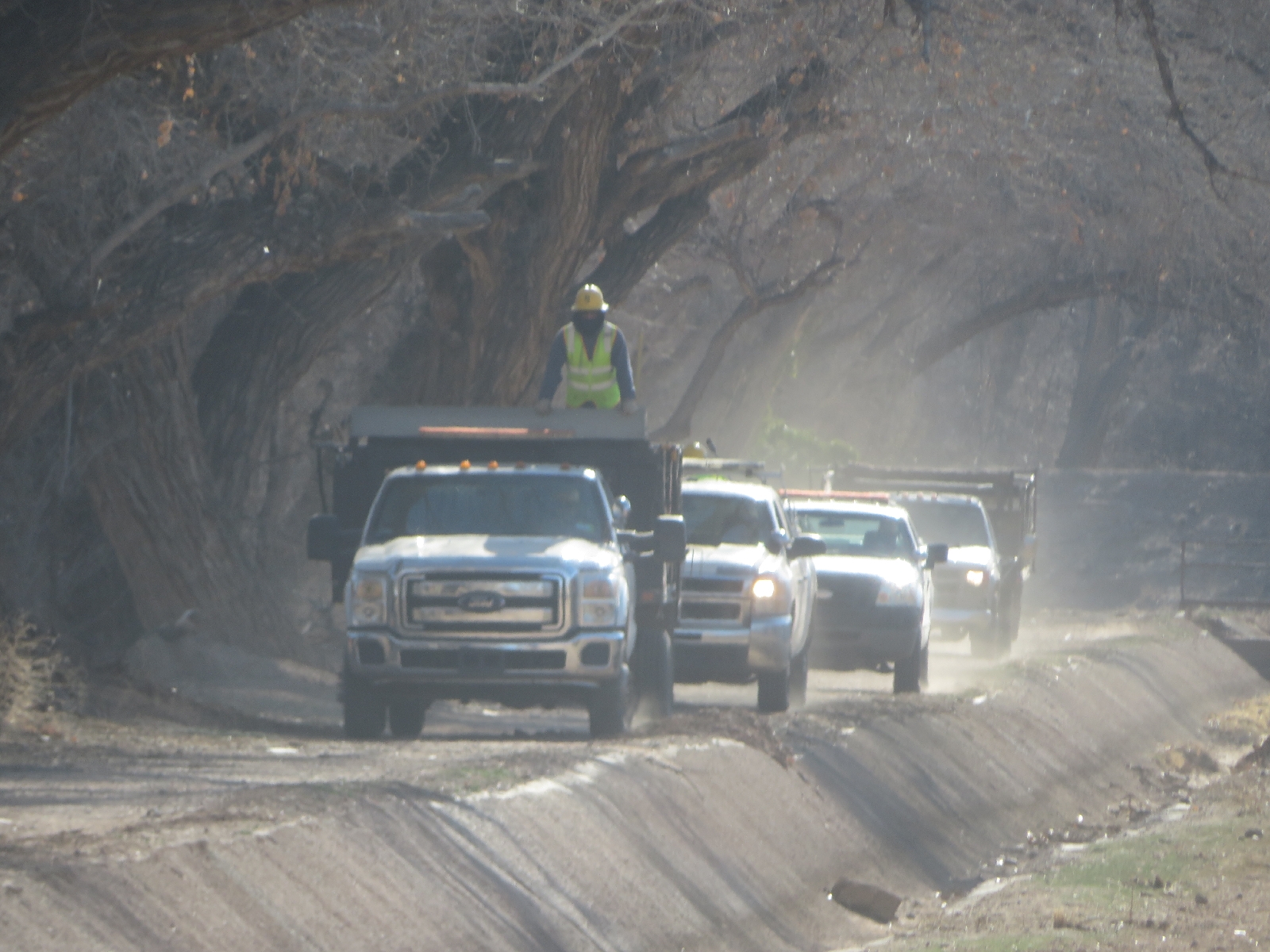
 Once upon a time, ditch maintenance was a community organized event, and it (sort of) still is. Now, however the work is left to people paid and specialized in the art of hauling things to the landfill. Fleets of trucks and people clear drainage routes and remove obstructions as the start of the irrigation season gets underway.
   
Trees and growth of all kinds are obstructions to a well running irrigation system and some places are cleared religiously of fire risks, obstructions, and piles of debris. While some areas are left alone, many community sections are a little over-zealously cleared of everything living.
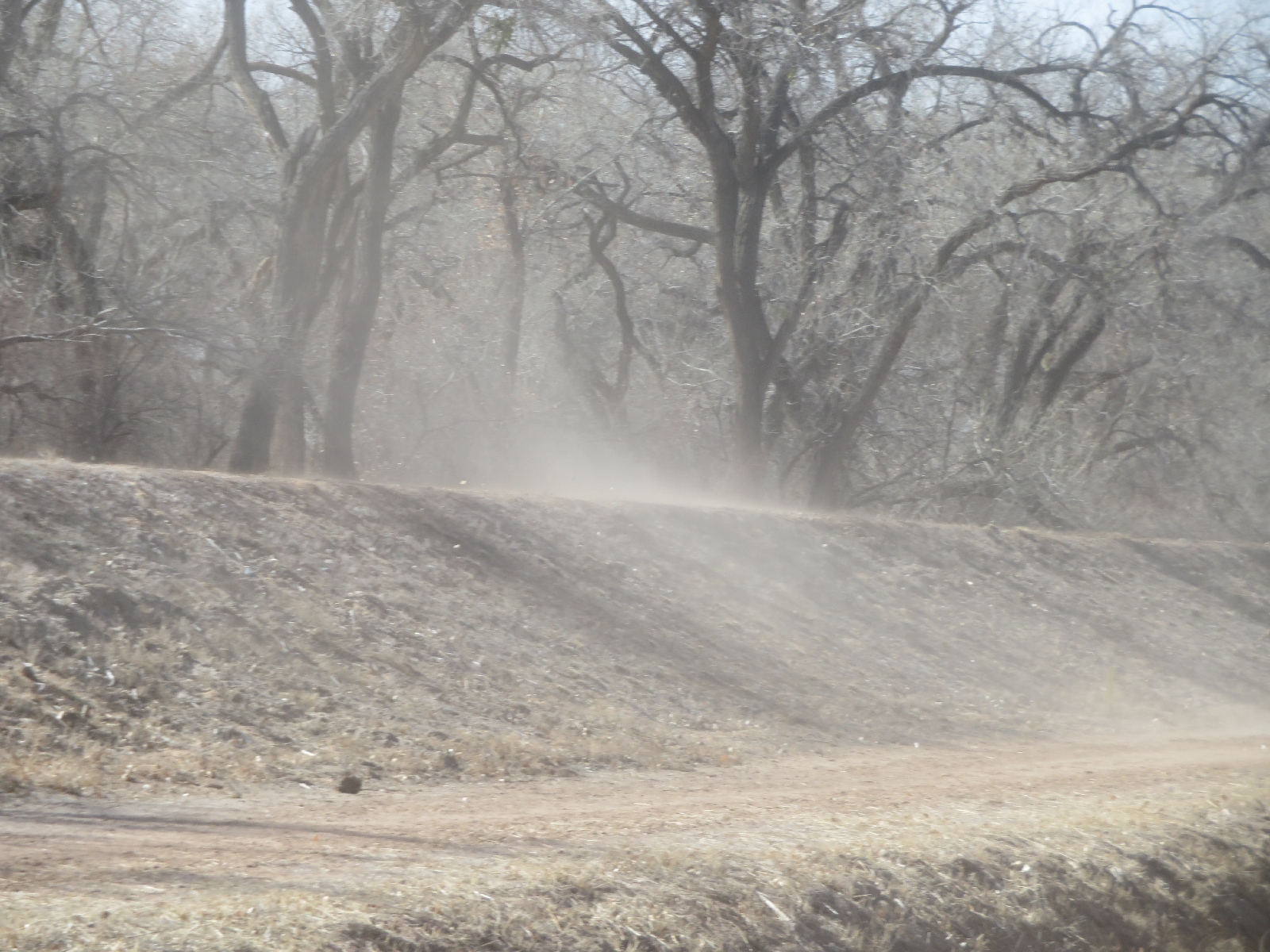
    Oddly, the early spring usually shows the problems with a good spring cleaning. Erosion, muddy conditions, blowing dust and strong winds are all reduced by having tall trees around to intercept the winds and the rains. It feels odd to see people replace trees with less effective lawns, but we all prefer to achieve tasks that have worked for others over unproven solutions that might be improvements for the future. Obviously, we have clearly failed to learn the lessons of the dust bowl era. Those who forget history and all that.
    While trees and a natural approach to outdoors care are better for us all, it will take time for the subtle effects of community, ecology, and common sense to win out over the pressures of commerce and conformity that migration from city suburbs into the countryside brings with it. Corrales is not a greenbelt project of cities such as Rio Rancho and Albuquerque. We are unique and special and we can do a better job of showing this to ourselves as we all navigate life's challenges.