Translate

Monday, February 26, 2024

Bloom


"The wind whispers secrets to the trees, and the trees nod their wise heads in return." - Michael Ende
 
It is the windy season in Corrales at the moment. Along with warnings about fires, we have blowing dust, falling tree limbs, and the start of the pollen season. Its hard to appreciate the value of our trees, but we should try. This is especially true as those trees absorb the force and dust from our wind.
The days have begun to grow longer since the end of the winter solstice and the longer days help show off the spectacular sunsets we can see on windy evenings. Even the golden light from the sun's slanting rays are diffused and more distinct on dusty days. Trees carefully measure the length of the day to plan when it is time to bring out their buds and new growth. this is a concept called photoperiodism that is central to many other botany concepts.
While snow is rare and getting rarer, it is worth remembering that those cold days are why the many birds come to spend the winter in New Mexico. The increasing temperatures are one of the cues for birds to begin to flock and start heading back north. The changes in the day cycle change both hormones and behaviors in birds as they prepare to migrate.
 
The process of hormonal changes cascades down to behaviors such as increased feeding for the females and courtship plumage in the males. In the case of mallards, the male becomes very attentive and often mirrors everything the female does. So, watch for synchronized dabbling duck butts. 
 
Great egrets migrate into the US and head to the southeast Untied States. They rest and feed in similar areas to the herons. There is more food available for all birds as the small fish begin to be attracted to aquatic vegetation and the larval insects hiding there.
 
For red tailed hawks, the focus is on territory. They need large areas to hunt in these birds are more obvious now as they move from tree to tree, trying to keep an eye out for interlopers while avoiding harassment from other nesting birds like ravens. 
 
The sandhill cranes are more often found in the shade of large trees. Daytime temperatures are getting too hot for them to feel comfortable now.  Also their food supplies are getting harder to find without a lot of time spent foraging. They also have to spend more time displaying and in courtship (overlapping, but distinct behaviors). Some have begun to head back north in small flocks ahead of the mass migration. They will mostly be gone by the end of March
 
Killdeer are common in New Mexico and have adapted well to human environment, often being seen around golf courses. They appear as the irrigation season begins and the acequias began to be prepared starting Feb. 26. These funny little birds are very vocal and have many fascinating displays to distract and divert larger animals from their nests.
 
There is evidence of much beaver activity in the Corrales Bosque. Due to heavy and constant hunting pressure of many years most beavers are nocturnal and very secretive. However, their activities are very obvious. They gnaw wood compulsively and their glossy coats are starting to look more bedraggled as the winter drags on. This tree might have been cut to reach the high branches. But could equally have been needed to build a new dam, clearing an area for young trees to grow, or they just needed a distracting activity to reduce their constant anxiety. Many predators are also present in the twilight hours listening for beavers that are far from the safety of the water.
 
Trees often have many uses that are not so obvious. Here, a raccoon is using one to hide from a vehicle's headlights. Raccoons often keep to high areas as they forage to avoid being ambushed by other animals. They prefer to be on the ground searching for scents of other raccoons or food, but dive for the trees when scared because they are not good at fighting or running. 
 
Cottonwood trees naturally shed their branches during high winds and can even start new trees this way in a process called cladoptosis. There are many regulations preventing tree limb removal during periods of bird nesting. Many people also get...tetchy when trees are removed. However, there is exceptions to the rules that allow work for safety reasons, such as reducing fire risk or dangerous limbs. Many people have suggested the somewhat exaggerated panic over falling trees might have something to do with the fact that no laborer likes to work in the middle of winter, instead of in the more congenial temperatures of spring. Actual arborists need a lot of time to safely and competently study a tree situation, and few people appreciate the work that can go into this, especially those people who are on a budget and influenced by aggressive sales tactics from tree removal companies.
Cheiropachus is a form of parasitoid wasp that seems to be pretty rare. Many people will notice the insects are coming out, especially during the heat of the noon day sun. Trees are essential habit for whole sections of insect ecosystems.
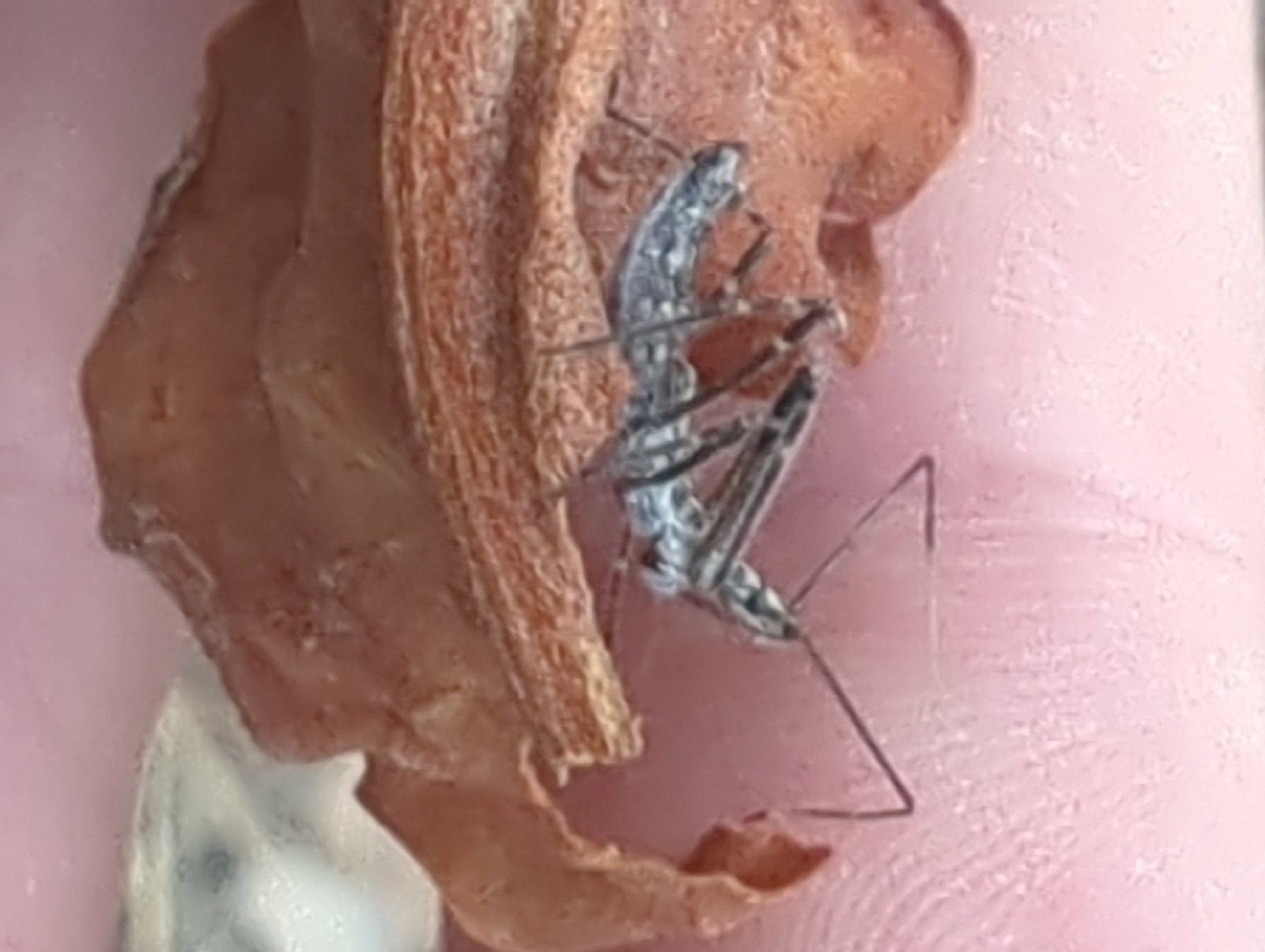
There are many undesirable things about clearing the ground of everything living to keep things looking tidy. That leaf litter found in the bosque under the cottonwoods are a part of the ecosystem that protects seedlings and insects with increased humidity and stable temperatures during the cold months. Here is a young assassin bug found in the yerba mansa growths. 
The trees are clearly budding now. These are the Siberian elms that bud very early in the year. Trees like elms, as well as pines and juniper, use the windy season to spread their pollen, creating miserable conditions for allergy sufferers. Their flowers have no petals because there are not enough pollinating insects around to be attracted.
 Porcupines are becoming more active in the daytime. They like feeding on those new buds, and are often seen reaching for elm buds. They benefit a bit from being near people and vehicles as this reduces their risk of being attacked by predators such as coyote, cougar and owls.
 
The beavers are coming out a bit more, but the biggest movement is among the gophers, which are starting their mating season after spending the rest of the year being fiercely territorial. Spring can also be a period of danger for these rodents from diseases such as plague and many others. Bacterial diseases like plague rise in the spring and New Mexico has an impressive number of human cases yearly. This gopher probably actually died by being attacked by others of its own species
The importance of being able to get along with others is appreciated but definitely not practiced enough. Corrales has a constant dialogue over the fate of trees on our lands. But when there is a fire because of too much firewood, or poor fire control practices that create a conflagration, it is all of us who will suffer, regardless of our precious opinions.

Thursday, February 8, 2024

Flash


As the eagle was killed by the arrow winged with his own feather, so the hand of the world is wounded by its own skill.

Helen Keller

The bosque is an amazing jewel. Loaded with birds, protected from development, and carefully balancing the disparate needs of recreation, safety, access, and conservation. While I often and loudly complaint that most users do not see the best of the bosque I am also amazed how many people we can squeeze into such a small space and keep everyone happy. Being a victim of success is an odd outcome for a nature preserve.

 Because the bald eagle is our national bird, we know quite a bit about the biology and habits. But I'll bet that not many people know about the efforts by Zuni Pueblo to maintain a group of 20 or so non releasable individuals. Eagle feathers are a rare treasure, and theirs is the only facility raising eagles with cultural significance in the US. This individual was watching a small flock of gulls, hoping one of them had a large fish that it could steal.
People like to give a bad rap to this eagle for being a thief. Still, it is a noble bird. I like this shot because it highlights the fearsome hooked claws that give them a fantastic fish gripping ability. Eagles don't live in New Mexico but many have flown through this year on their way to breeding grounds. We also see ospreys, who, surprisingly, have nested here in the past.

The killdeer is a strange plover species that often wanders along the edges of the river looking for opportunistic sources of food. It has a very nervous affect, which you would expect from a defenseless bird which just about everything will hunt, from seagulls to domestic dogs.
For a small duck, the bill on the shoveller species definitely stands out. I think this is a female but the males can look similar when in non breeding plumage. That large bill allows these ducks to strain small aquatic insect larvae from the water more effectively than the more generalist mallards.
I think these are ring billed gulls. If you look close, you can see the ring on their square profile bills that are a target for juveniles at feeding time. They are attracted to the rich bounty of the landfills of Rio Rancho, but like to roost in the middle of the day on the river. This behavior likely reduces the space competition with the common ravens. These gulls don't seem to feed on fish, much to the dismay of the eagle that hopes to snatch those. Those trips up and down the bajada form part of the complex web of nutrient cycling of the riparian habitat.
Fish, birds, and water form a complex web of interconnections that no one understands at the local level. This applies double to birds that are capable of traveling the length and breadth of the United States. This blue heron is showing the plumage feathers that are two very thin feathers on the back of the head. It is odd that in an area with all the required needs for breeding, this bird does not have any established heronries that I have found. In other areas, such as Colorado, this indicates disturbance, especially by people on watercraft. While the animal is common overall, there is some debate as to whether the populations are decreasing in the Southwest.
Common mergansers are a fish eating diving duck that I saw near to the roosting seagulls. They don't eat trash and I noticed the small flock of these distinctive birds moved on after only a few days.
Woodpeckers are a typical bird using its feeding method to also create nesting sites. Their drumming on dead wood is both a type of communication, method of locating insects, way to catch insects, and also create nest cavities. Multitasking doesn't come close to describing their skills with dead wood.
Humans use wood for food and shelter, but not in the same way other animals do. This is a southwestern subterranean termite and there are at least ten species of them. The type of caste that reproduces is called "alates". These are not ants, and very few species damage houses. On warm, moist days the winged, fecund members of the colony form a swarm and spread out after mating to form new colonies that mostly feed on tree roots is moist soil.
This rather large leaf-hopper is a Texananus species. They are known for being vectors of plant diseases. This is bad news in monocultures like those found on huge mid-western farms, but parasites in general are excellent at promoting diversity and encouraging resilience in places with a variety of interconnected forests ecosystems. These insects have adapted their lifestyles to human farming practices and will never be eradicated by pesticides.

No one seems really sure what this plant eating beetle is, but with so many species, that isn't surprising. 25% of all species on earth are a beetle, (many of the rest are wasp species) and there are many more yet to be discovered.
Family Cecidomyiidae. This is one of the numerous gall midge species. Many important farm crops become damaged because of an overactive defense reaction to an insect's attack. Other, wild plants produce galls as a way to limit the insect's spread. This interaction between plant and insect evolution is completely under studied when compared to other areas of insect and plant biology. For example, we  don't know why these insects are one of the few animals capable of producing carotenoids. But we do know they used a set of genes from a fungus that was spliced into their own DNA to be able to do it.
Infraorder Bibionomorpha is the group of insects just above gall midges in the taxanomic hierarchy. This insect has larva that eat decaying plant matter and fungi instead of producing galls. These are some of the first insects to appear in the early spring and support a huge food pyramid of mind goggling complexity involving hundreds of other species, such as small insect eating birds, raptors, and mammals.
Oxypoda is a species of Rove beetle, found in the soil and on fungi all over the world. Not much is known about them. People aren't sure if they do actually eat fungi, or when the larva pupate into adults. Insects that live in the decaying leaf litter often are able to survive thought the winter as fungi are resilient to cold or dark weather.
Diamesa is a small non biting midge in the bloodworm family. Bloodworms often thrive in oxygen poor water such as those found in water saturated bogs and drainage ditches.
 Crickets will migrate into houses in the winter. They don't like the dry conditions found inside but they appreciate the warmth and they are omnivores that can eat a little of just about anything. They aren't singing yet as the temperatures are much too cold to be trying to attract other crickets.
Rumex is a group of plants found in marshy areas and are the sole food source for the ruddy copper butterfly. While the plant is used widely as both food and medicine by people it certainly isn't at any risk of over harvesting. Just like the Yerba mansa, the actual knowledge of foraging is shrouded in myth and chicanery.

Birds are famously nest producers and their use of plants for this purpose is impressive. Some of the passerine birds have begun to build nests. The larger birds tend to re-use old nest sites, and often use nest building aptitude as a part of their courtship rituals.
There is always debate whether porcupines are trying to camouflage themselves as an abandoned nest, or if the likeness is just incidental. Right now the porcupines are congregating in common areas, attracted by the new buds being produced by the trees and the many areas available for snoozing and feeding.
Porcupines actually need a variety of trees to survive. They feed on the thin bark of Russian olive and elms, but they also need old growth cottonwoods to sleep in during the day and swales of coyote willows or New Mexico olive to hide in during their foraging.
The area of the river near to the Biopark is being cleared to reduce the fire danger to nearby structures. Each year the city crowds more into the areas around the river and the riparian habitat is being lost. Without varied tree cover, there are no animals that are going to be able to live here. The only animals you see now are bike riders and dog walkers. The winter is bad because there is no shelter for anything larger than a mouse, but in the summer there is no plant material to hold the moisture and the dust blows over barren soils.
It is sad that we are more able to agree on destroying nature, than we are on learning why it needs to be saved. A day's work with a bobcat and a couple of people can produce a pile of sawdust and another pile of logs. But if people change their minds about forest management, it will take more than twenty years for the bosque to regrow those trees.
 Of course, this is not to say that the forest doesn't have engineers constantly working on it. This irrigation ditch has been dammed by a beaver and the sediment is slowly filling it in. One day, if left alone, this area will become a meadow. But as it slowly transitions, it supports a succession of different ecosystems, each with their different relationships and roles to play. Even the diversity of wet and dry areas improves the variety of places animals can call home. In a patchwork of ecosystems the boundaries are always areas that are most productive.
 
Beaver used to be plentiful, but they are coming back and have learnt a trick or two in the meantime. They have adapted to changing conditions and learnt to avoid humans and their activities. Where the river is channelized, they dig burrows instead of building stick dams. But they still like to fell trees, as much as a chew toy as a way to reach tall branches.
 When the fruit trees at Wagner's farm are pruned, animals move in to investigate. Sandhill cranes like to feed on fallen apples. 25% of an apple harvest that is used to press juice in the fall is waste. This material, termed pomace is often left in the fields for the wildlife. The skunks, porcupines, cranes, and coyotes clear it up with relish.

The Corrales bosque is a hard place to enforce laws, so the local emergency services have to be creative. But no amount of surveillance is ever able to replace the support and vigilance of the local population. Those who visit do not always follow the rules, but the majority do appreciate the preserve as a treasure. Generations of people have lived and thrived in Corrales without the need for any exclusions. But as the threats from outside the community continue to mount in number and risk, it requires everyone to realize we have a treasure here worth thinking about and protecting better.