"Spring is the time of the year when it is so beautiful that even the ugliest things are beautiful." - Bob Ross
Nature in Corrales celebrates the beauty of nature after months of darkness and cold. While change is constant in nature it seems like change is the most welcome over these next few months. Of course, along with flowers, sunshine, and color comes mosquitos, mud, and heat. But these things, too, are beautiful, in a different way.
Ugliness in beauty is seen in this feral turkey in full courtship regalia. While it is stunningly beautiful to the hens, the actual male bird is bad tempered and
the fleshy lumps of weird colors look so bizarre up close.
Herons are normally solitary, but the female on the left is clearly interested in the male on the right as he sidles closer to show off his best side.
Many birds visit Corrales, Some are here all year, some visit for a while, others stay for only a very short time. This yellow legs is surveying the domain but will be gone very quickly after a quick refueling on freshwater invertebrates.
This cinnamon teal is a very small duck with a large bill. Like many birds, the males have a red eye to display their breeding status to each other.
Downy woodpeckers use their noisy activities to communicate. A favored perch is an old dead tree limb with good acoustics. This one is listening closely to it's nearby rivals and their responses in between jam sessions.
Coopers hawks are specialists in hunting through dense foliage and rely on silent stealth and surprise. Now is also nest building season so they are also looking for good twigs to snap off trees.
Red wing blackbirds dominate their area, and suffer no competition through constant trilling and aggressive displays. Good real estate can be hard to find in the wetlands and the pressure is constant.
Scrub jays are vocal but tolerate others close by, mostly because food and shelter is in plentiful supply in pinon-juniper forests. Their long call sessions allow a pecking order to be established as they evaluate each other's fitness.
Turkey vultures are usually creatures of summer deserts, ranging over large areas on tall thermals. In the winter, many travel down to Costa Rica and other areas of South America. They often stop by the Bosque to rest and wait for the day to warm up before continuing their trip north.
European carp are strong swimmers, well designed to swim into and out of shallow flooded fields hunting for insects or plant material. They were imported in the late 1800's into the US because they are a good food fish. The canals in Corrales are colonized by fish swimming in from the Rio Grande outlet at the Alameda bridge.
The common snapping turtle can grow to monster sizes, but nothing like those in the southern states. Turtles rely on sunlight to digest food so come out on sunny days to bask. They have excellent senses of smell and spend the whole winter buried in the mud in a state of torpor.
The musk rats colonize the canals quickly once the water levels rise. They feed on cattails and live in tunnels on the edge of the water ways. They are often found near beaver dams, but are not nocturnal and have thin, rat like tails. They are also about a third smaller than beavers.
The irrigation season is beginning. This marks a change for many of the animals and their lifestyles and heralds the warming temperatures to come. One of the first things to notice is how smells of spring will return as the humidity rises in the soil and humic acids from lignin breakdown volatilize into the air.
Plants interact with the physical world is odd ways. Where the ditch edges are left unmown, roots stabilize the soil while also allowing water deeper into the substrate. Where the soil is shorn, the unstable, friable soil slope quickly dries out, erodes and the sediment washes downstream.
Oddly, the cattails are both controlled and renewed by mechanical cutting by the village. They grow from tubers in the mud and are slowed, but not stopped by being cut. If the water level is changed by a new beaver dam, then cattails often disappear from that stretch of water.
Juniper is becoming a more frequent tree in the Bosque. Their dense vegetation grows slowly, but inexorably. Many other river managers have noticed the quick spread of these trees, but with so many other issues, the matter has so far received little attention. Tree management in a preserve usually produces mixed results because ecosystems react very differently than gardens to human activity.
Daffodils are a clear sign of spring and can survive a short frost. This allows them to get started earlier than most other plants. Growing from a bulb means they quickly can send up a shoot once the conditions are right. Bumblebees pollinate these flowers, but most cultivated varieties do not produce much nectar.
The grasses are also ready to spring up quickly. The east facing slopes are now significantly warmer that the shaded side in the morning. allowing a much longer growth cycle for plants. If the water is clear and shallow, they have ideal growing conditions. Grasses survives because there are not many animals that have the specialized digestion needed for these low nutrition plants. They also recover quickly from damage.
Flood waters scour the flood plain, removing old material and creating new real estate far more quickly and efficiently than humans ever could. The backwaters created by the loops of flowing water are a haven for amphibians. The more delicate river bank specialists, such as cottonwoods are slowly dying out as there are no more seedlings surviving into reproductive age.
Scorpion weed thrives in disturbed sandy soils by roads, the rich green color is a sign these plants are growing quickly while conditions are good. These are one of the few plants that are thriving due to human activity.
In the drier soils like the foothills, the youngest plants grow slower and with deeper taproots. Often they use
mycorrhizal relationships and
holobionts to grow effectively. The survive in the shade where the moisture is marginally higher.
Fungi are surprisingly effective at soil alteration and seriously understudied as a group. Modern farming methods of tillage, pesticide and fertilizers often seem to be trying to remove their influence altogether, which is a mistake. This mushroom shows the hole that releases spores into the wind.
Siberian elm seeds have already begun to spread. These trees were imported to reduce wind blown erosion of the soil and the ecological problems developed. Not all elms are bad, but by solving one problem, these trees created many others by changing the native flora.
Ornamental flowering trees have a delicate balancing act to perform. They want to maximize seed production by flowering early, but also could lose a year of seedlings if they flower too soon. Most fruit tree ornamentals are breed to flower very early.
Cottonwoods have more than one strategy for reproduction. They produce
catkins in the early spring instead of flowers. These structures existed before flowers first appeared and rely on wind for pollination, bypassing insects entirely.
Dandelions are evolving right along with human lawns. These fascinating plants are vilified, but for no real reason. They have been used as everything from coffee and rubber substitutes, to natural dyes, salads, and medications and even wine.
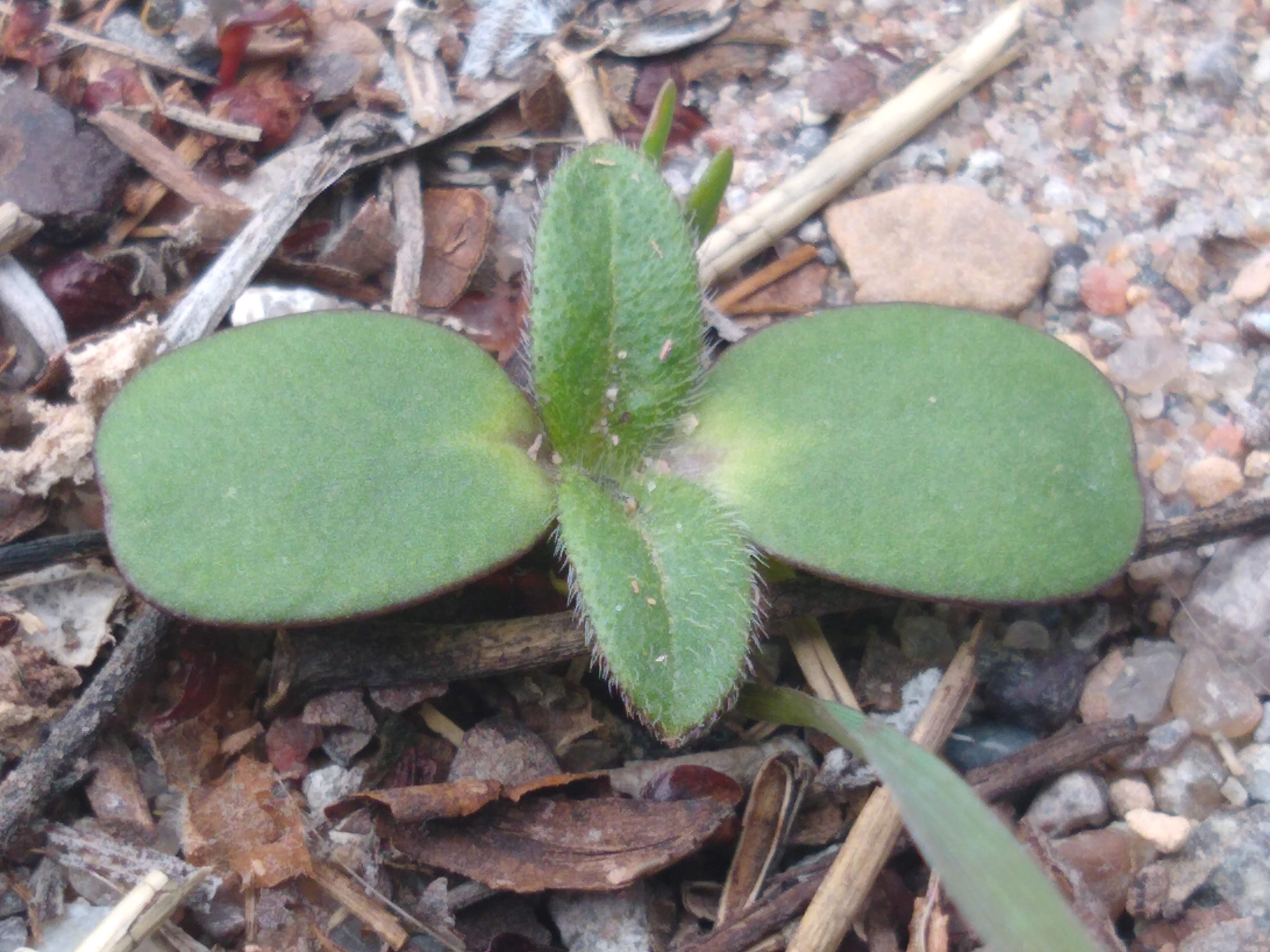
This is a sunflower seedling. They are readily spread around by the numerous bird feeders found in the Corrales area to attract wildlife. Notice the two hairy leaves and the two smooth leaves? The smooth leaves are called cotyledons and help convert the seed stores into energy for the embryo quickly. The hairs on the true leaves are called trichomes and do many things, such as reduce attack from sunflower moth caterpillars.
Insects and plants are both friends and enemies to each other. This is a kelp fly on the Seattle coastline, these insects can form an important part of the food chain, turning rotting seaweed into food for migrating shore birds. Flies are endlessly adaptable.
This is a yellow striped armyworm moth. The caterpillars are noted as being pests of crops. While this species dies easily in cold weather, the caterpillars that survive can pupate on the ground and then moths appear in early March to lay eggs very early in the season.
This is some sort of inchworm moth (moths are hard to identify) but this is a large family of 23,000 different moth species. The wavy lines are an effective camouflage on rough surfaces such as stucco.
The beautiful muted colors and crenulations of the American Lappet moth help this species blend in with dead leaves. This poor flier is often found during the day resting near light sources as it navigates to places for laying its eggs.
This is the Indian meal moth. The larva can chew through cardboard and can often be found in dog food bins and tolerates very arid conditions. They can be found in nature, but appear to have found their niche evolving along with humans in perishable food items such as birdseed, pet food, and cereals.
These moths are found year round in the US and their caterpillars are usually found on bindweed plants. The adults are strange in many ways, especially as they fly during the day, unlike most other moths. Their wings are thin plumes that are rolled up like a boat's sails when resting.
When spring comes, there is a lot more small puddles of water which attract the many tiny insects that have begun to hatch. I actually don't know what insect this is, but I'm guessing it feeds on buds and looks a lot like a sap sucking thrip/aphid species.
A Sphaeroceroidea species of fly. This species likely feeds on dung and is much smaller that the house flies we normally associate with poop. Spring brings out far more horse riders and dog walkers and they also contribute to an ecosystem of insects uniquely adapted to this food source. The antennae are small and club-like because these flies travel at high speeds and are adapted to sight.
Non biting midges are one of the first insects that come out in the spring. They pollinate some of the first plants to appear, such as the mustard grasses and mistletoe. Typically, flies with smaller eyes will have larger antennae. Midges spend a lot of time hovering at dusk and dawn, so odor is more important to them over vision.
Bibio flies remain locked as couples for extended periods when mating and often are the first to be found on the side of building as the sun warms east facing walls.
With the cold weather finally behind us, the landscape is set to change dramatically as the green spreads across the tree canopy. The beautiful snow that was so brief is going to be missed as we head into the windy, hot dust storms and seed blizzards of the tree season.