A picture can paint a thousand words, it is true. But no-one ever said those words were going to to agree with each other. Just like the natural world, words need processing to make sense. This chaotic messiness also allows endless freedom of expression, but at the cost of confusion and irrelevance. In Corrales village we are often confronted with the balance of order and disorder. We humans try to live in a messy natural world. We cope by pruning the bosque with blunt tools, with often odd results. Watching gleaming Porsche SUV's roar down a pot-holed dusty 15 mph road is one example. Another is immaculate garden lawns abutting ramshackle houses in the desert sands. The most odd, however, is the grape clusters.

There is a lot odd about grapes in New Mexico. Many family farms stopped producing wine grapes in the US after Prohibition. The long history of vines in New Mexico is impressive, as are the unique varietals that used to be found here. Now however, the increased efficiency of viniculture, and the associated marketing, is bringing a distressing homogeneity to what is supposed to be an endearingly chaotic process. Still, nature persists in playing jokes on those who take themselves seriously.

This is clearly coyote scat. Not even a question. You will notice that the berries have been plucked one by one and not even slightly digested. Coyotes are still hunted often in the US. They are baited not with bloody hunks of quivering flesh, but sugary nom-nom's like this fruit. Coyotes have a sweet tooth and are lured into the village by low hanging fruit such as these grapes on a picturesque garden fence. Then, those same homes will repeat the phrase "Keep an eye on your children and small pets" when the daytime coyotes are seen.
New Mexico state has some of the widest variety of ecosystems in the US. Some of the best wetland meadows are found above 10,000 feet in the US. Here, the "parks" at San Pedro parks are kept open by a combination of poor drainage and browsing animals. Many types of animals live here, but I wager most people traveling through are unlikely to see a coyote, especially now, when people are all looking for elk.
These ruins in the Pecos National Park give a glimpse of how far back in time this land has been used by people. The yellow colors of the cow pen daisies blend perfectly with the blue, white, green and red of the landscape. The large, flat fields also hide vast archeological treasures, all hidden from our uncomprehending minds.
The upland parks hide many strange wonders, like these brook trout that swim in streams most visitors would think are too small for fish to be in.
Just like in the bosque, the relentless march of climate change is bringing more aspen and blue spruce to the areas that used to be dominated by ponderosa pine and juniper.
Chipmunks have adapted very well to areas grazed by cows. The lack of large predators such as secretive bobcats is allowing their numbers to increase. These are also very adaptable animals, able to be at home in old trees or cattle grates with equal ease. This one is begging for peanuts from a passing motorist (me). No luck with me, but this seems to be an easy meal option with the other vehicular visitors, based on all the discarded nut shells.
At a nearby state park camping site, the constant light at the bathrooms attracted this toad as the insects flock to the fake moon. These toads get quite big on the steady diet, if they can avoid the constant car traffic, that is.
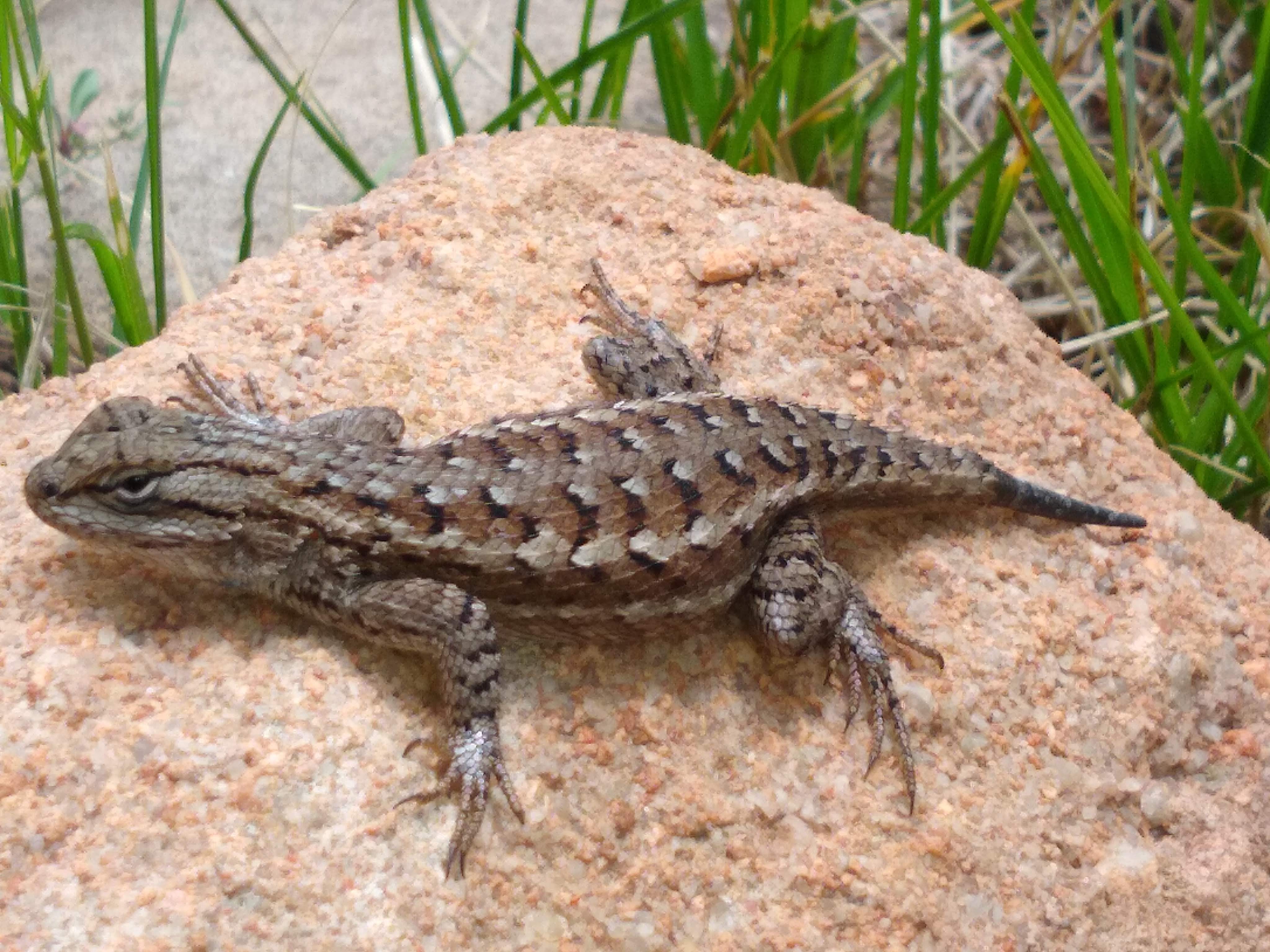
In built up areas near people, the lizards are also around in large numbers. Like most, this one has lost part of the tail, likely due to a domestic pet (dog or cat). While the loss of the tail reduces reproductive success, the ready supply of hiding places and insects (flies) more than compensates to boost their numbers above a "natural" level.
This year, there are many sunflowers in the boundaries of the ditches and roads. The vast majority of blooms are from errant birdseed and are small headed. Their seeds sustain many birds through the winter and also support a huge variety of insects now. This is a tachnid fly that is pretending to be a wasp. Most larva of these species develop inside caterpillars
Beetles are very unappreciated as a pollinator family, they use the sunflowers for many roles. The most common is a meeting place, just like a bar. Between nectar sips they court the opposite sex, and size up their competition.
There are many types of bees, those seen on sunflowers early in the morning are usually not domestic honeybees. This is a species of mining bee that had slept on a nearby flower, ready to start the day collecting pollen for the small brood chamber it has excavated.

Grasshoppers are not usually pollinators, but there is actually no reason they shouldn't be. Many people don't know that these insects actually eat some smaller insects. This one actually was eating the sunflower petals. It also blends in quite well with the yellow and brown flower center.
This is an ichneumonid wasp with a complex lifestyle typical of wasps. This one was hanging out at a sunflower for an opportunity to meet other like-minded wasps
This insect is not a Corrales native, but was found up in the Santa Fe National Park. This tough customer is actually a katydid, not a cricket genus.
Also up at 10, 000 feet elevation was this wandering garter snake. They feed on many animals but mostly prefer tadpoles and small fish. Completely harmless like most snakes, I still avoid handling wild animals simply because neither they, nor I, need the added stress in life.
Corrales began as a farming community. The long, thin fields do not easily break up into housing plots but ended up that way due to inheritance in large families. A field strip like this is essential to keeping the cost of owning and feeding livestock down to affordable levels. Maintaining grassland is not as simple as it would seem.
Irrigation and drainage is a community level activity, which makes it annoying when other groups operate at cross purposes. Whatever fell into the ditch here was pulled out with a truck winch. I think it was an ORV of some sort. It will be interesting watching how the bull rushes return to the area of open water that was left behind.
The ditches suffer quite a lot of abuse from many sections. They are often used as a dumping ground for unwanted garden plants. They seem to always be filled with visitor's trash. These lilies are probably an accidental introduction. I wonder if they are keeping that section of the ditch free of the bulrushes that are spreading in all other areas?
The bird diversity is soon going to be reaching a peak as the fall migration gets underway. Canada geese feed on short, open grassy areas. They love large private gardens like those found at the Las Brisas complex. They will also be seen on golf courses and school playing fields along the river.
Many other birds prefer dense woodlands like this night heron. They roost during the day in low branches over the larger ditches.
Towhee, like this one, are usually found in the leaf litter year round. If you ever hear a loud rustling in the undergrowth, is is always one of these birds. They seem pretty uninterested in disturbances from humans nearby.
When is a plant a "weed" or a "volunteer" or an "ecosystem"? The Russian thistles and kochia we see on the ditches of Corrales serve many useful, fundamental purposes. They can be found to be full of beneficial insects. In the mornings there are many bumblebees hanging onto the leaves with their mandibles as they snooze.
In among the invasive weeds are also many other species of plants that need the extra shade and humidity that tightly packed, green plants can provide. This bumble is sleeping on a dried globe mallow stalk.
The same holds true for below the ditch banks. There are many tunnels through the grass that definitely attracts the local coyotes' attention. These are made by both natural and invasive rodents of many types. These burrows are often reused later by birds such as the American Woodcock. These birds are rarely seen in this state, but do occur.
The fig eater beetles will likely be disappearing soon. These colorful insects are not found as often on the sunflowers, but are usually snoozing on the tallest globe mallows along the ditch edges.
Darkling beetles are often seen scurrying in the leaf litter, probably laying eggs. These big drab insects are ubiquitous at times. Their biggest predator is probably mice, surprisingly.
Many caterpillars take a while to find, but this one is very distinct. Those long hairs are not as venomous as you might think, but they serve as bristles to deter wasps from laying eggs inside the caterpillar.
Other insects use different tactics to ward off attacks. This cotton ball is pretty innocuous in the grasses, but hides a secret. The insulation from the cold also helps maintain a constant temperature and humidity.
The inside is actually a cocoon. The fluffy coating would not stop a wasp with a decent ovipositor, but other insects use this fluffy mass to prevent attacks from ants. Those colonies are very defensive right now because they are protecting aphid colonies.
Another common solution to prevent predators is to just lay more eggs than can be removed. While this is tough on the individual insects, the method seems to work great in unstable environments where individuals have short life spans.
Nature always seems to favor those who look closer with new surprises. This pair of moths have wings that look just like the grass flower stalks they favor and not easily seen. They have a impressive beauty if one is lucky and keeps looking.
Is is a well known fact of life that where there is beauty, there will also be ugliness. This is a slime rot on an elm that forms because of the mild temperatures. The autumn months are also know for the spread of unliked organisms such as molds, bacteria, and suchlike illnesses. Hay fever symptoms are also peaking in many people. The
balance of life, between beauty and ugliness may be artificial, arbitrary, and capricious. But it is not just a theme for English class essays. Separating the two worlds takes effort and thought. But we do need to understand why things should be as they are. In nature, that road map is laid out for those who want to look. Just look at those grapes hanging in a neighbor's garden.